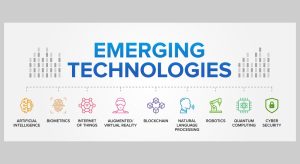


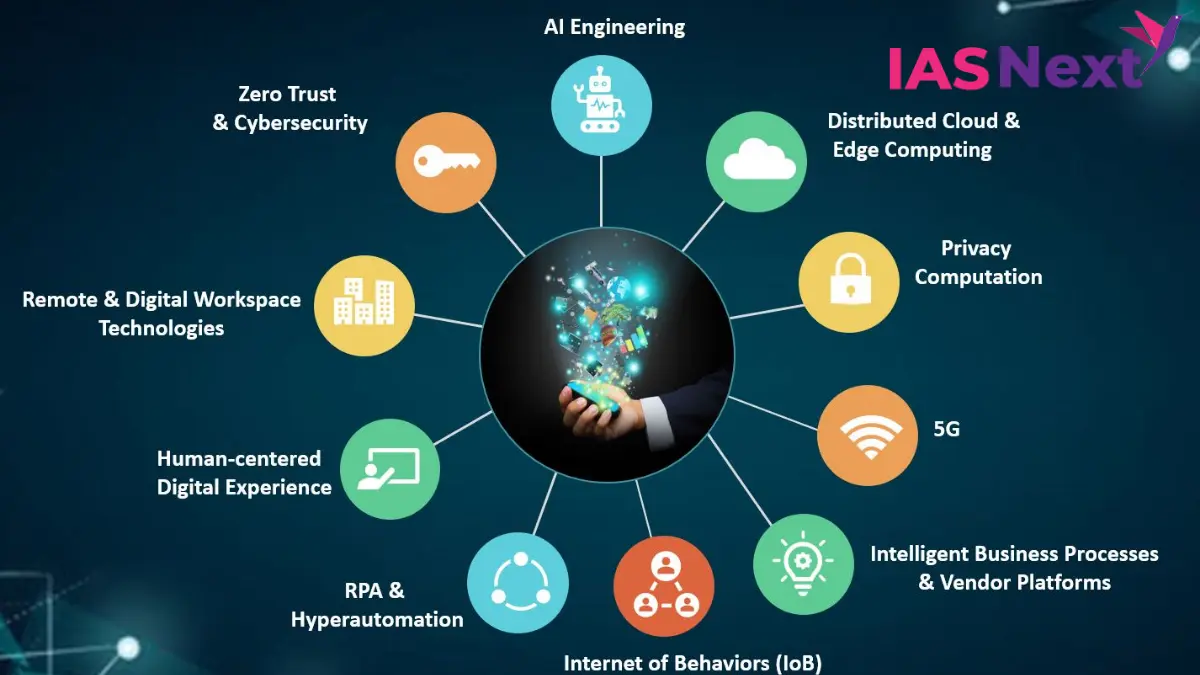
“Emerging Tech” (emerging technology) refers to technical innovations that are still in their early stages of development or adoption but have the potential to significantly disrupt existing industries and create new ones. These technologies are typically characterized by rapid growth, a high degree of uncertainty regarding their full impact, and the potential for a broad, transformative effect on society and the economy.
Key characteristics of emerging technologies include:
- Radical Novelty: They introduce fundamentally new methods or applications, building on different basic principles than existing technologies.
- Rapid Growth: The number of actors involved (scientists, firms, users), funding, and related publications/patents often increases quickly during their development phase.
- Prominent Impact: They have the potential to exert a major influence on various sectors (e.g., healthcare, manufacturing, communication) and even address global challenges like climate change.
- Uncertainty and Ambiguity: Their long-term effects and precise applications are not yet fully understood or predictable, and clear standards may not be established in the early stages.
- Convergence: They often result from the convergence of different fields (e.g., biology, materials science, and AI) working toward similar goals.
Examples of current emerging technologies include:
- Artificial Intelligence (AI) and Machine Learning: Systems that perform tasks typically requiring human intelligence, such as reasoning, learning, and decision-making.
- Quantum Computing: Harnesses quantum mechanics to perform complex calculations exponentially faster than traditional computers, with potential in cryptography and drug discovery.
- Biotechnology and Nanotechnology: Manipulation of matter on an atomic and molecular scale, with applications in medicine, materials science, and agriculture.
- Augmented Reality (AR) and Virtual Reality (VR): Technologies that blend digital and physical worlds for immersive experiences in education, gaming, and design.
- Blockchain and Distributed Ledger Technology: Secure digital ledger systems that prevent data alteration, with uses in finance, supply chain management, and digital identity.
Over time, as technologies mature and become widely adopted, they are no longer considered “emerging” and become standard parts of the economy and society.
What is meant by emerging tech?
The term commonly refers to technologies that are currently developing, or that are expected to be available within the next five to ten years, and is usually reserved for technologies that are creating, or are expected to create, significant social or economic effects.
What are the 4 emerging technologies?
Four emerging technologies are Artificial Intelligence (AI), the Internet of Things (IoT), quantum computing, and biotechnology. AI uses machine learning for tasks and analysis, IoT connects physical devices for data exchange, quantum computing uses quantum mechanics for complex calculations, and biotechnology develops solutions for health and sustainability.
- Artificial Intelligence (AI): AI encompasses machine learning and natural language processing, enabling systems to analyze vast amounts of data to make predictions, automate tasks, and improve user experiences through tools like virtual assistants and chatbots.
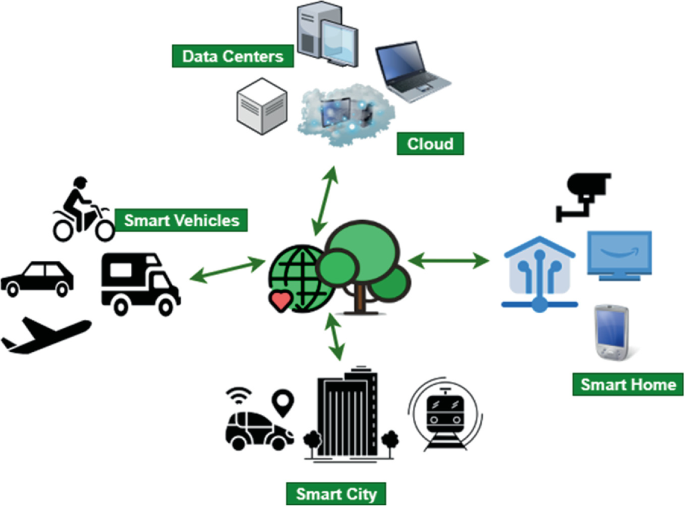
- Internet of Things (IoT): This technology connects physical devices to the internet, allowing them to exchange data. Examples include smart homes and industrial sensors, which use this connectivity to improve efficiency and enable new services.
- Quantum Computing: A new form of computation that uses quantum mechanics to solve complex problems that are intractable for classical computers. It has potential applications in drug discovery, materials science, and cryptography.
- Biotechnology: The application of biology and technology to create new products and solutions. This field includes advancements like gene therapy, stem-cell therapy, and cultured meat, with significant impacts on healthcare and food production.
What are the top 5 emerging technologies?
Emerging technologies for an intelligent world
- AI avatars
- Digital twins
- Multimodal user interfaces
- Smart environments
- Spatial computing
- Compacting models
- Autonomous unmanned aerial vehicles
- Generative AI
What is the difference between tech and emerging tech?
Emerging technologies are technologies whose development, practical applications, or both are still largely unrealized. These technologies are generally new but also include old technologies finding new applications. Emerging technologies are often perceived as capable of changing the status quo.
Is AI an emerging technology?
Emerging technologies, including AI, genomics, and telemedicine, are transforming health care delivery and research.
What are the five characteristics of emerging technology?
The resulting definition identifies five attributes that feature in the emergence of novel technologies. These are: (i) radical novelty, (ii) relatively fast growth, (iii) coherence, (iv) prominent impact, and (v) uncertainty and ambiguity.
What are the stages of emerging tech?
The technology life cycle encompasses four distinct stages: introduction, growth, maturity, and decline.
Which tech is trending in 2025?
Technology trends for 2025 are dominated by advancements in Artificial Intelligence, particularly AI agents and governance, along with a growing focus on security, such as disinformation security and post-quantum cryptography. Other major trends include the expansion of spatial computing, energy-efficient computing, and hybrid and space computing, as well as developments in biotechnology and AI-driven robotics.
Artificial Intelligence and Automation:
- AI Agents: AI systems are becoming more sophisticated, capable of performing multi-step tasks autonomously, from managing schedules to completing digital workflows.
- AI Governance: Platforms are emerging to help manage and govern the use of AI, ensuring responsible and ethical deployment.
- AI-Driven Robotics: The capabilities of robots are being enhanced by AI, blurring the lines between human and machine and leading to more advanced automation.
- Generative AI: The use of generative AI is expanding from simple tools to more complex applications in various industries.
Security and Trust:
AI in Cybersecurity: AI is being used to both create new cyber threats and develop advanced defenses against them.
Disinformation Security: With the rise of deepfakes and AI-generated content, technology is focusing on new defenses to combat disinformation.
Post-Quantum Cryptography: As quantum computing advances, there is a shift towards developing new cryptographic methods that are secure against both classical and quantum computers.
Reference link:
https://www.google.com/search?sca_esv=f84ae5225a953008&rlz=1C1CHBD_en-GBIN1169IN1169&q=what+do+you+mean+by+Emerging+Tech&source=lnms&fbs=AIIjpHxU7SXXniUZfeShr2fp4giZ1Y6MJ25_tmWITc7uy4KIeuYzzFkfneXafNx6OMdA4MRo3L_oOc-1oJ7O1RV73dx3MIyCigtuiU2aDjExIvydX85cOq96-7Mxd4KSNCLhHwYIo4RJXEXVWYwYSeCFXG0JdYTLWdGa_I4PyP0BgYGRHNIbdMFbrD_o_GBAZy7NacTQRv9A0riGhTiSFsnEhwxWZgLfo1e6y15rSNs0rVjEZ5dVZZc&sa=X&ved=2ahUKEwj3u4GFn_aQAxVfcGwGHZsoE_8Q0pQJegQICRAB&biw=1366&bih=641&dpr=1