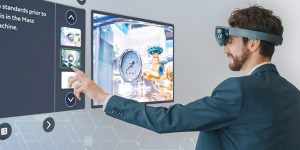


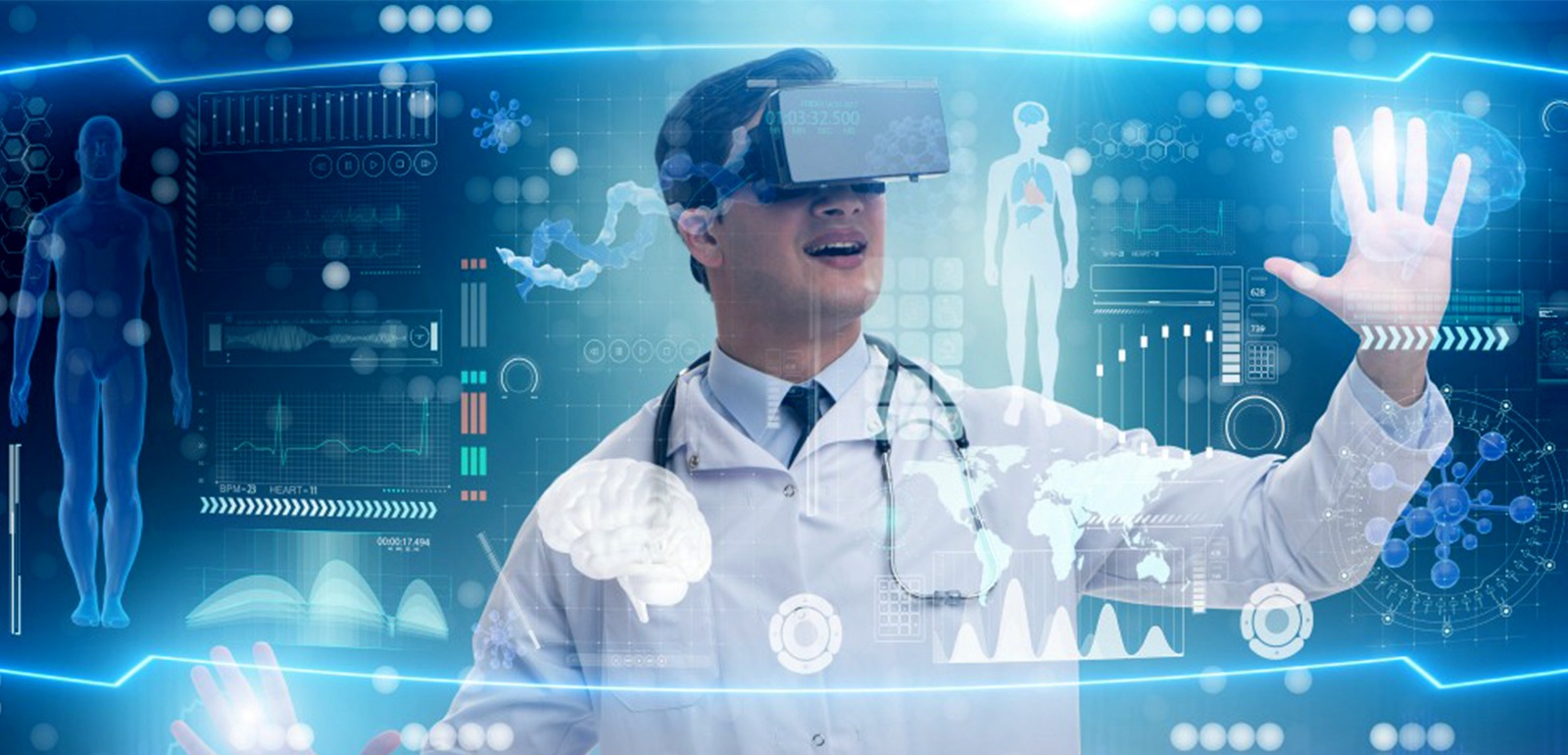
Virtual Reality (VR) is used for creating immersive, simulated experiences across various fields, including entertainment (gaming, movies), education (virtual field trips, interactive lessons), training (flight, medical, military simulations), and business (virtual meetings, 3D design visualization). Its ability to simulate realistic environments allows users to feel present in a digital world, enabling them to interact with it in real-time for exploration, learning, and work.
Entertainment:
- Gaming: Creates highly immersive video games where players are placed inside the game’s world.
- Movies and experiences: Offers new ways to experience films and other media in a 360-degree environment.
- Virtual travel: Allows users to “visit” different places and explore them from a unique perspective.
Education and training:
- Simulations: Provides a safe and repeatable environment to practice complex or dangerous tasks, such as surgical procedures for medical students or handling hazardous situations for firefighters.
- Interactive learning: Creates engaging and interactive learning environments that can improve knowledge retention.
- Virtual field trips: Enables students to explore historical sites or locations that would be difficult or impossible to visit in person.
Business and professional use:
- Design and architecture: Allows architects and designers to walk through and experience a building or product in 3D before it is built.
- Collaboration: Facilitates virtual meetings and conferences, allowing remote teams to interact in a shared virtual space.
- Sales and marketing: Lets customers explore products, such as touring a potential house or seeing how a piece of furniture would look in their home.
Other applications:
- Wellness: Can be used for guided meditation, yoga, or therapeutic experiences in calming virtual environments.
- Research: Provides a controlled environment for researchers to study human behavior and test hypotheses.
- Creativity: Enables users to create and interact with 3D art and digital content.
Key Benefits:
The primary advantages of using VR stem from its ability to:
- Create immersive experiences that enhance engagement and knowledge retention.
- Provide practical training in safe, controlled environments where mistakes have no real-world consequences.
- Enable experiences that are otherwise impossible or impractical in reality, such as space exploration or tours of restricted heritage sites.
- Foster empathy by allowing users to experience situations from different perspectives.
What is VR mainly used for?
Virtual reality (VR) is a technology that simulates a computer-generated environment and makes it possible to interact with it in a very realistic way. It has become increasingly popular in recent years, with applications in fields such as gaming, education, healthcare, and entertainment.
Can I watch Netflix in VR?
Yes, you can watch Netflix on VR headsets, primarily by using the web browser on devices like the Meta Quest or through a dedicated app like Bigscreen, which streams content from a connected computer. While there was an official Netflix VR app, it is no longer available, so the browser and other apps are the main methods for streaming Netflix in VR.
Using the web browser:
- Open the browser app on your VR headset, such as the Meta Quest Browser.
- Navigate to www.netflix.com and sign in to your account.
- You can then select your content and watch it on a large virtual screen.
- Some VR headsets, like the Meta Quest 3, offer different viewing modes and screen sizes for a more immersive experience.
Using apps like Bigscreen:
- Download and install a VR app like Bigscreen, which allows you to view your computer’s desktop in VR, notes the YouTube video.
- Both your VR headset and computer must be on the same Wi-Fi network.
- Open the Netflix app on your computer, or go to the website in the browser.
- You can then stream the content on the virtual screen provided by the app.
- Bigscreen also allows you to watch with friends in virtual rooms and access other content, including free movies and live TV.
- Other considerations>>
- For VR headsets, ad-supported plans are not supported, and you will need to switch to an ad-free plan to watch on these devices.
- Some users have reported that certain third-party browsers may not work correctly for streaming, so it’s best to use the official browser or well-known streaming apps.
- It may also be possible to download content from the Netflix app on the headset for offline viewing.
Where is VR most used?
VR Applications: Key Industries already using Virtual Reality
- Automotive industry. Virtual Reality (VR) is reshaping how the automotive industry handles vehicle design, engineering, and customer interaction
- Healthcare
- Retail
- Tourism
- Real Estate
- Architecture
- Interior design
- Gambling
Is VR ok for the brain?
VR is not definitively proven to be bad for your brain long-term, but it can cause short-term issues like headaches, nausea, and dizziness (known as cybersickness) due to sensory conflict. The long-term effects are still being researched, but some studies suggest potential risks like abnormal brain function over time, while others highlight VR’s therapeutic benefits for conditions like PTSD and chronic pain.
Short-term effects:
- Cybersickness: This is a form of motion sickness caused by the conflict between what your eyes see and what your body feels. Symptoms include nausea, dizziness, headaches, and disorientation.
- Eyestrain: Headsets that are worn for long periods can cause eyestrain.
- Altered perception: After extended use, some users report feeling like they are still in the virtual world or that their body “lags” in real life.
Potential long-term concerns:
- Abnormal brain function: A study on rats suggested that VR could cause some neurons in the hippocampus to “shut down” or fire randomly, raising questions about how it might affect brain function over time.
- Unpredictable rewiring: While the long-term consequences are unknown, there is a possibility that the brain could rewire itself in unpredictable or potentially harmful ways with prolonged use.
Potential therapeutic and positive effects:
- Pain and injury rehabilitation: VR is being used to treat phantom limb pain and help patients with stroke recovery and acquired brain injuries regain motor function.
- Mental health treatment: VR is an effective tool for treating phobias, PTSD, and certain cognitive impairments.
- Cognitive function: It can help improve motor skills and cognitive function in some patients.
What to keep in mind:
- The technology is still new: Much of the research is ongoing, and the long-term effects are not yet fully understood.
- Moderation is key: Like any technology, overexposure can lead to negative effects, so it is important to take breaks.
- Content matters: The type of content you are using can also play a role in potential effects.
- Consult a professional: If you have concerns or experience severe side effects, consult with a healthcare professional.
If you want to know more then go to reference link: https://www.google.com/search?q=what+is+the+use+of+Virtual+Reality+(VR)&rlz=1C1CHBD_en-GBIN1169IN1169&oq=what+is+the+use+of+Virtual+Reality+(VR)&gs_lcrp=EgZjaHJvbWUyBggAEEUYOTIICAEQABgWGB4yCAgCEAAYFhgeMggIAxAAGBYYHjIICAQQABgWGB4yCAgFEAAYFhgeMggIBhAAGBYYHjIICAcQABgWGB4yCAgIEAAYFhgeMggICRAAGBYYHtIBCTExMDE5ajBqN6gCCLACAfEFPYW_LbXSIQzxBT2Fvy210iEM&sourceid=chrome&ie=UTF-8