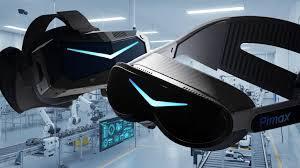


Today’s generation, particularly Gen Z and Millennials, uses VR headsets primarily for immersive entertainment and gaming, education and training, and social interaction. The technology provides unique, hands-on experiences that traditional media and methods cannot match, a key appeal for a tech-savvy demographic.
Key Reasons for VR Headset Use:
- Immersive Gaming & Entertainment: The most common consumer application, VR transports users into a virtual world, allowing them to physically move around and interact with the environment for a heightened sense of presence and excitement. This goes beyond traditional screens, offering a new level of engagement with games, movies, and live events like concerts or sports.
- Education and Training: VR offers practical, hands-on learning experiences that are difficult, dangerous, or expensive to replicate in real life.
- Medical students can practice surgeries on virtual patients.
- Military personnel train in simulated combat scenarios without real-world risk.
- Students can go on virtual field trips to historical sites or space, making learning more interactive and memorable.
- Social Interaction: VR platforms allow users to connect and interact with people from around the world in shared virtual spaces, which became especially important during the COVID-19 pandemic. This includes socializing, collaborating on projects, and even participating in virtual events.
- Unique Experiences & Exploration: VR makes it possible to experience things that are otherwise impossible, such as swimming with dolphins, creating 3D art, or visiting the depths of the ocean. This ability to “live a story” rather than just observe it is a major draw.
- Accessibility and Personalization: As standalone headsets become more affordable and user-friendly, VR is more accessible to a wider audience than the earlier, expensive PC-tethered systems. The experiences can also be personalized to individual preferences and learning styles.
Overall, the current generation uses VR headsets because they offer novel, immersive, and interactive ways to engage with content and others that were previously unimaginable.
What is the main purpose of a VR headset?
Virtual reality is a computer-generated 3D world. In this world you can experience different environments like exploring an underwater world or visiting a different country, all from your own home. When you put on a VR headset, you can enter one of these environments and become part of what is happening.
How is VR being used today?
Virtual reality (VR) is a technology that simulates a computer-generated environment and makes it possible to interact with it in a very realistic way. It has become increasingly popular in recent years, with applications in fields such as gaming, education, healthcare, and entertainment.
Why is VR becoming more popular?
In 2024, Virtual Reality has become more mainstream than ever before, with a significant increase in adoption rates across various industries. The global pandemic of 2020-2021 accelerated the demand for VR technology as people sought alternative ways to work, learn, and socialize remotely.
Why is VR good for society?
Frequently Asked Questions around why is VR important:
It creates immersive, interactive environments that improve learning, simulate real-world scenarios, and enhance empathy, ultimately advancing fields like education, healthcare, and entertainment.
Is VR good or bad for you?
VR is generally safe in moderation, especially when used in a suitable environment with proper breaks and good fit. If you or your child experience ongoing discomfort, it’s a good idea to check in with your optometrist.
Can I watch Netflix in VR?
Yes, you can watch Netflix on VR, but without a dedicated Netflix app, you must use the headset’s web browser or a third-party app. The most common method is through the web browser on VR headsets like the Meta Quest by navigating to www.netflix.com, or by using an app like Bigscreen to stream from your computer or the browser.
Method 1: Use the headset’s web browser
- Open the web browser on your VR headset (e.g., Meta Quest Browser).
- Go to www.netflix.com and sign in with your account.
- Choose what you want to watch.
- Note: Some ad-supported Netflix plans are not available on VR headsets.
Method 2: Use a third-party app
- Bigscreen: This app allows you to watch Netflix in a virtual movie theatre environment. You can either use the built-in browser or connect to your PC via the remote desktop feature to stream from your computer.
- SideQuest: You can install the official Android Netflix app via SideQuest for potentially lower-quality offline viewing, though the quality may be reduced compared to web streaming, notes this YouTube video.
Method 3: Stream from your PC
- Use the remote desktop feature in an app like Bigscreen to stream Netflix from your PC directly to your VR headset. Both your PC and headset must be on the same Wi-Fi network.
Important considerations:
- The official Netflix VR app is no longer available on most VR headsets, according to Upload VR.
- Some streaming services and features may be affected by DRM (Digital Rights Management) protections, notes Reddit users.
- You may need an ad-free plan to watch on some VR headsets, as ad-supported plans are not available, according to Netflix.
Is VR ok for the brain?
While long-term effects are still being studied, VR use can negatively impact the brain and body, causing short-term issues like motion sickness, eye strain, headaches, and disorientation. Some research also suggests potential cognitive and emotional effects, such as weakened reaction times, loss of balance, and amplified negative emotions, with potential risks for children whose brains are still developing.
Immediate and short-term effects:
- Motion sickness and disorientation: The mismatch between what you see in VR and what your body feels can lead to “cybersickness,” which feels like motion sickness and can cause nausea, sweating, and dizziness.
- Eye strain and headaches: Prolonged use can cause eye strain, dryness, and headaches, especially since the headsets are held close to the eyes.
- Impaired balance: VR can sometimes lead to temporary issues with balance and coordination, a condition known as ataxia.
- Altered perception: After use, some users report a temporary feeling of disorientation or a “lagging” sensation in the real world.
Potential long-term and cognitive effects:
- Cognitive changes: Some studies in animal models show that VR can lead to significant cognitive alterations.
- Amplified negative emotions: VR experiences have been linked to amplified negative emotions in some players.
- Risk for children: There are concerns that VR could have more significant negative effects on children and teenagers because their brains are still developing.
What you can do to mitigate risks:
- Take frequent breaks to prevent eye strain and motion sickness. The 20-20-20 rule (look at something 20 feet away for 20 seconds every 20 minutes) can help.
- Blink consciously while using VR, and consider using artificial tear eye drops if your eyes feel dry.
- Use VR in a safe, clear space to avoid physical injury.
- Be aware of the content you are consuming, as it can affect your emotions and perception.
Which country uses VR the most?
United States
1. United States leads AR/VR penetration with 18% of households owning at least one device. The U.S. is currently leading the global race in AR/VR device adoption, with around 18% of households owning a headset or AR-compatible gear. This means nearly 1 in 5 homes in America has already embraced immersive tech.
What are the three uses of virtual reality?
Three major uses of virtual reality are entertainment, education, and training/simulation. In entertainment, VR is used for immersive gaming and movies, while in education, it creates interactive learning experiences like virtual field trips and simulations. Training is another key use, as VR provides realistic simulations for professions like surgery or flight control, and for corporate and industrial purposes.
Entertainment:
- Immersive gaming: VR provides a more engaging experience than traditional video games by placing the user inside the game’s world.
- Virtual experiences: It’s used to create immersive movies and experiences that go beyond what’s possible with a standard screen.
Education:
- Interactive learning: VR can be used to create interactive and immersive learning environments. For example, students can virtually explore historical sites, the human body, or outer space.
- Personalized education: Environments can adapt to a student’s pace, allowing them to learn and practice skills in a personalized way.
Training and simulation:
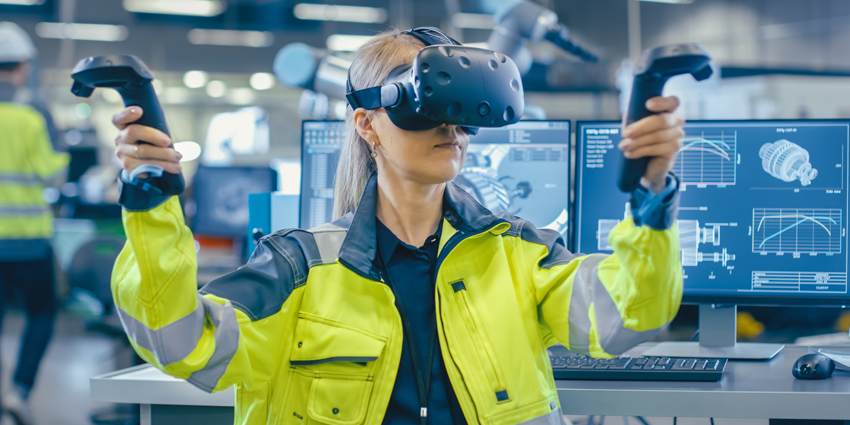
- Professional training: VR allows professionals to practice complex or dangerous tasks in a safe, simulated environment. Examples include surgical training for medical students, or flight simulators for pilots.
- Skill development: It can also be used to train employees on new machinery, procedures, or safety protocols without any real-world risk.