

Database technology is the system of tools, methods, and software used to store, manage, and retrieve data efficiently and securely. It involves creating a structured collection of information, known as a database, and using a database management system (DBMS) to define, store, update, and access the data with ease. This technology underpins many applications by providing an organized way to handle large volumes of information for purposes like tracking inventory, managing customer data, or powering dynamic websites.
Key components and functions:
- Database: An organized collection of electronic data, which can include text, numbers, images, or videos.
- Database Management System (DBMS): A software that acts as an intermediary between users and the database, allowing for the creation, modification, and deletion of data without needing to work with low-level files. It also enforces security and data integrity.
- Data storage: The DBMS manages the underlying files where the data is physically stored, abstracting the complexity from the user.
- Data manipulation: Users and applications interact with the DBMS using commands to perform actions like adding, updating, or deleting data.
- Data retrieval and analysis: The DBMS provides the means to query and analyze the data. For example, a Relational Database organizes data in tables and uses Structured Query Language (SQL) to retrieve it, while systems like OLAP use multidimensional cubes for faster analysis.
Common types of databases:
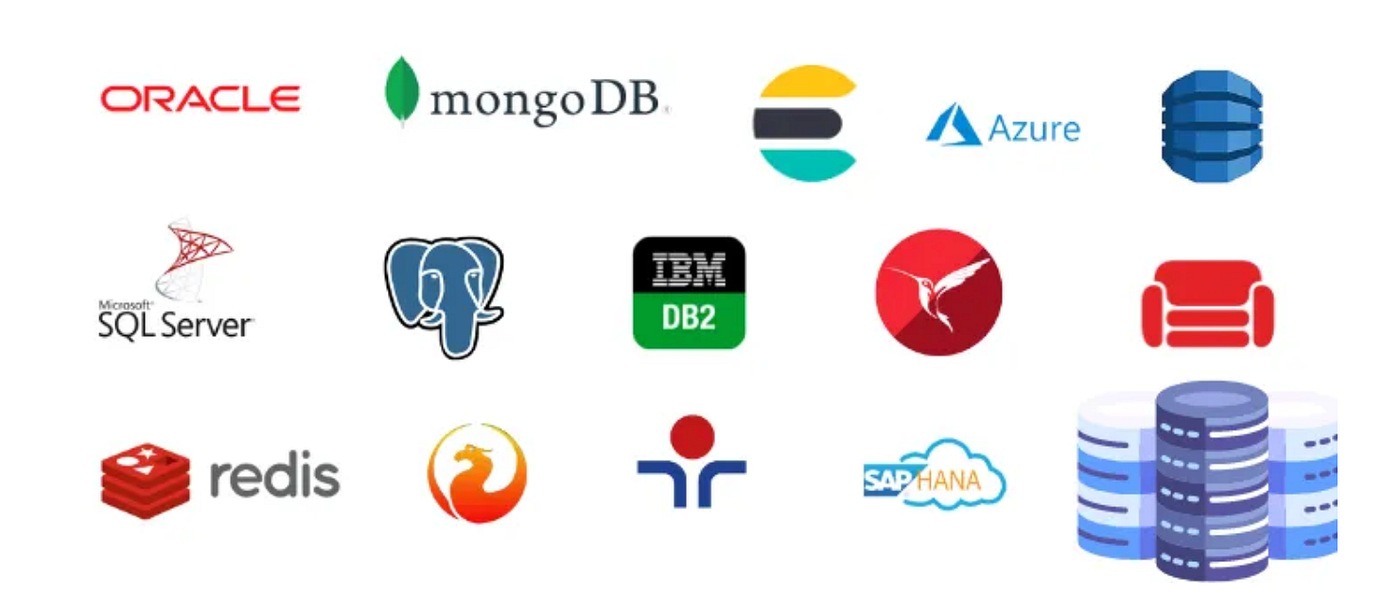
- Relational Databases: Store data in tables with rows and columns, making them ideal for structured data like customer lists or financial records. Examples include MySQL and Oracle.
- NoSQL Databases: A broader category that doesn’t use the traditional table-based relational model. Examples include MongoDB and Redis, which store data in various formats like key-value pairs.
- Object-Oriented Databases: Represent information as objects, similar to how they are used in object-oriented programming.
What are the 4 types of database?
The four forms of databases are hierarchical, network, relational, and object-oriented. Hierarchical databases organize data in a tree-like structure with a single parent-child relationship, while network databases use a more flexible graph structure with multiple parents and children. Relational databases store data in structured tables with relationships defined by keys, and object-oriented databases store data as objects, similar to object-oriented programming.
1. Hierarchical Databases:
- Structure: Organizes data in a tree-like structure with parent-child relationships.
- Relationship: A child record can have only one parent, but a parent can have multiple children.
- Best for: Data that can be naturally organized in a strict hierarchy, such as a company’s organizational chart.
2. Network Databases:
- Structure: Uses a graph-based structure where records can have multiple parents and multiple children.
- Relationship: Allows for more complex, many-to-many relationships between data records.
- Best for: Representing complex relationships that are not easily modeled in a simple hierarchy.
3. Relational Databases:
- Structure: Stores data in tables (relations) composed of rows (records) and columns (fields).
- Relationship: Tables are linked using common fields, such as a primary key in one table and a foreign key in another.
- Best for: Structured data and applications that require complex queries and transactions, and adherence to ACID properties (Atomicity, Consistency, Isolation, Durability).
- Examples: MySQL, PostgreSQL, Oracle.
4. Object-Oriented Databases:
- Structure: Stores data in the form of “objects,” which are similar to objects used in object-oriented programming languages.
- Relationship: Objects can contain complex data types, such as 3D models or multimedia, and can be related to other objects.
- Best for: Applications that work with complex data structures, such as those found in engineering, multimedia, and AI.
What is DB technology?
A quick overview of modern database technology>>
Spreadsheets process numbers and databases process information—specifically, structured information. Databases can be designed to do just about anything with information, such as: Track, organize, and edit data. Collect data and produce reports.
What is database in simple words?
A database is a structured, organized collection of electronic data that is stored and can be easily accessed, managed, and updated. Think of it like a digital filing cabinet for information, which can include text, numbers, images, or videos. Databases are managed by software called a database management system (DBMS), which allows users to add, find, and change data efficiently.
- Organized: The data is stored in a systematic way, often in tables with rows and columns, which makes it easy to find what you need.
- Electronic: The data is stored digitally on a computer or server.
- Accessible: Multiple users or applications can access and query the data at the same time.
- Managed: A DBMS provides the tools to manage the data, such as a software program to add new records or a specific language like SQL to query the information.
Is SQL a database technology?
SQL databases have been around for decades, and there’s a reason they’re still the standard for managing structured data. Stability and maturity—SQL is a proven technology that’s been trusted for decades. Standardized language—SQL is universal and straightforward to learn.
What are the 5 main data types in databases?
Some common data types are as follows: integers, characters, strings, floating-point numbers and arrays.
What are 10 examples of databases in computer?
Table of contents>>
- 2.1 MySQL.
- 2.2 MariaDB.
- 2.3 Microsoft SQL Server.
- 2.4 Oracle DBMS.
- 2.5 PostgreSQL.
- 2.6 MongoDB.
- 2.7 Redis.
- 2.8 IBM DB2.
Is Excel a database?
No, Excel is not a database; it is a spreadsheet program, but it can be used to manage small amounts of data like a simple database. True databases have robust features for handling large datasets, scalability, security, and complex data relationships, which Excel lacks. Excel is better described as a user-friendly, front-end tool for data visualization, analysis, and reporting, often used in conjunction with a separate database for larger-scale needs.
Excel vs. a true database:
- Excel: A spreadsheet tool designed for calculations, analysis, and creating charts. It’s great for small, simple datasets that are manually updated and don’t require advanced features like multi-user access or complex relationships.
- Database: A structured system for storing, retrieving, and managing large volumes of data. Databases are designed for security, scalability, and data integrity, making them ideal for applications with many users and large datasets.
When to use which:
- Use Excel for:
- Initial data organization for small projects.
- Quick calculations and simple data analysis.
- Creating visual reports and charts from small datasets.
- Use a database for:
- Storing large amounts of data.
- Managing data for multiple users simultaneously.
- Ensuring data security, integrity, and consistency.
- Handling complex data relationships and queries.
Integrating Excel with a database:
- You can use Excel as a front-end to a real database, such as Microsoft Access or a SQL database, to leverage the strengths of both systems.
- Excel can connect to databases to pull in data for analysis and reporting, while the database handles the actual storage and management of the data.
What is the main role of a database?
The primary function of a database is to store, organize, and manage data for efficient storage, retrieval, and updating. It acts as a central, structured repository for information, making it easy to access and manipulate by users and applications.
- Data Storage: Provides a structured and efficient way to store large volumes of data, such as customer information or sales transactions.
- Data Retrieval: Allows users to query and fetch specific data quickly using languages like SQL (Structured Query Language).
- Data Management: Enables efficient insertion, updating, and deletion of data while maintaining organization.
- Data Integrity and Security: Enforces rules to ensure data accuracy and consistency and provides mechanisms like access control to protect against unauthorized access.
What databases use SQL?
There are numerous SQL database engines (products) used to build software applications. Some of the most popular include PostgreSQL, MySQL, SQL Server, and Oracle. Some database engines are open source while others are commercial offerings.
Database management has a good requirement as far as jobs are concerned. These database managers earn well both in India and abroad. To know more click to reference link: https://www.google.com/search?sca_esv=e5171c9a1aba7a5e&rlz=1C1CHBD_en-GBIN1169IN1169&q=What+is+database+technology+%3F&source=lnms&fbs=AIIjpHwlKokgWLGHc0Wnn7PmZAuCXKabI7fdB8Yz68I_8yTfewIgLs4rsLUq04UK78RY-YjGuDz3ojU1cHiJYYizbnhG2faqqf4A7Jr3N3ipWXm0fC_6oRlRp1F9YfU-szCL_qisZ7yxmQkOcL4yfo8TFiwe-9Q73DzMLVZ4zEJs4Dubdvnz6sPrhdpEpREEp6-WlYbnB1VfZA6plskmpozjNSIyqRsO-RXJUW7hYOUC1gmNZPpN3cY&sa=X&ved=2ahUKEwihzZbo2pSRAxW8UWcHHYbCNpUQ0pQJegQIDxAB&biw=1366&bih=641&dpr=1