
AI-native platforms are systems designed from the ground up with artificial intelligence built into their core, not just added as features; they use AI intrinsically for data-driven operations, enabling real-time adaptation, autonomous decision-making, and self-optimization, unlike traditional software that retrofits AI, resulting in greater efficiency, scale, and new capabilities across industries like networking, cybersecurity, and software development.
Core Characteristics:
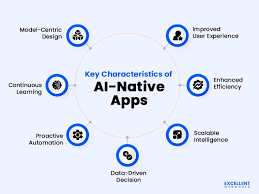
- Intrinsic AI: AI isn’t an afterthought; it’s fundamental to the design, deployment, and maintenance.
- Data-Driven: Continuously consumes and produces data for new functionality, learning from every interaction.
- Adaptive & Self-Learning: Evolves with usage, improving automatically rather than relying on fixed rules or manual recoding.
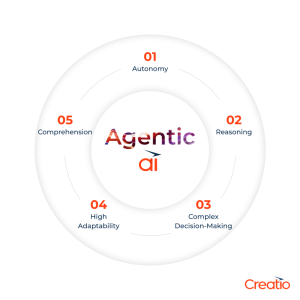
- Autonomous Operations: Powers end-to-end decision-making and automation with minimal human intervention, often using agentic systems.
Key Differences from AI-Enabled Systems:
- AI-Enabled (Retrofit): Traditional software with AI features bolted on (e.g., an old phone with added apps).
- AI-Native (Purpose-Built): Software designed around AI from the start (e.g., a modern smartphone designed around apps).
Examples & Applications:
- Networking: Predictive analytics, real-time optimization, autonomous issue resolution.
- Cybersecurity: Behavioral AI for threat detection, generative AI for defence hardening (e.g., Abnormal Security).
- Software Development: AI-generated code, low-code/full-code prototyping, MLOps integration (e.g., JitAI).
- Content/Creative: AI-native email (Superhuman), generative art (Midjourney).
Advantages:
- Speed & Efficiency: Real-time processing, faster development, and intelligent automation.
- Scalability & Resilience: Handles massive data/workloads with dynamic resource scaling.
- Enhanced Security: Built-in security protocols (Zero Trust), data privacy focus.
- New Business Models: Enables previously impossible operations and value creation.
AI-native platforms are systems designed from the ground up with artificial intelligence as their core foundation, rather than as a secondary “bolted-on” feature. In these architectures, AI is pervasive across every layer—including data processing, user interface, and system operations—enabling them to learn, adapt, and evolve continuously based on real-time data.
Key Characteristics:
- Intrinsic Intelligence: AI is woven into the system’s “DNA,” driving decision-making and logic rather than just serving as an optional plugin.
- Continuous Learning: These platforms feature built-in feedback loops that allow models to retrain and improve performance automatically as new data is ingested.
- Zero-Touch Operations: Autonomous mechanisms handle routine tasks like resource scaling, fault recovery, and performance optimization without manual human intervention.
- Data-Centric Design: Built to manage both structured and unstructured data (like images and audio), often utilizing vector databases to support high-dimensional AI workloads.
Types of AI-Native Platforms:
- Networking: Systems that proactively predict congestion, optimize bandwidth, and heal faults in real-time, such as those offered by HPE Networking.
- Databases: Platforms like TiDB that integrate vector search and machine learning directly into the database engine for low-latency AI applications.
- Analytics: Tools that allow users to ask complex questions in natural language and receive instant, reasoned insights without traditional dashboards.
- Development: Frameworks such as JitAI that shift the focus from manual coding to specification-centric development, where AI handles the build process.
Comparison: AI-Native vs. AI-Enabled:
| Feature | AI-Native | AI-Enabled (Embedded) |
|---|---|---|
| Foundation | AI is the core architect | Traditional code with added AI features |
| Learning | Constant, automatic adaptation | Periodic manual or vendor updates |
| Logic | Driven by AI models | Fixed, rule-based programming |
| Operations | Autonomous/Self-healing | Manual management and maintenance |
Industry Examples:
- Finance: Real-time fraud detection and personalized credit scoring.
- Cybersecurity: Abnormal Security uses behavioural AI to profile user interactions and neutralize threats like phishing before they reach users.
- Telecom: Moving toward 5G “cognitive networks” that are self-configuring and self-optimizing.
- Compliance: Verify AI performs complete internal audits and gathers evidence autonomously rather than just flagging issues.
What is AI native platform?
AI native platforms are built to think and adapt. They embed intelligence throughout every layer—from data pipelines to user interfaces—so AI isn’t just a feature, it’s the foundation. 2. They enable real-time, self-serve insights without the dashboard bottleneck.
What are the AI platforms?
An AI platform is an end-to-end, unified environment that development teams use to design, customize, and manage AI solutions, helping streamline AI innovation at scale.
What are AI native devices?
Simply put, AI-native refers to systems and companies fundamentally designed with AI at their core; it means that AI is engineered intrinsically from the ground up and is a pervasive core component of operations and services.
What are AI natives?
AI-native networking refers to computer networking systems that are conceived and developed with AI integration as a core component to enable simpler operations, increased productivity, reliable performance at scale, and an assured user experience.
What are 7 types of AI?
The 7 types of AI are often categorized by capability (Narrow, General, Superintelligence) and functionality (Reactive Machines, Limited Memory, Theory of Mind, Self-Awareness), representing a progression from basic, task-specific systems to hypothetical, human-level or superhuman intelligence, with today’s common AI falling into the first two categories.
By Capability (Levels of Intelligence):
- Narrow AI (ANI): Specializes in one task, like Siri or spam filters, dominating current AI.
- Artificial General Intelligence (AGI): Hypothetical AI with human-like cognitive abilities, capable of learning any intellectual task.
- Artificial Superintelligence (ASI): Future AI surpassing human intellect across all domains, still theoretical.
By Functionality (How They Work):
- Reactive Machines: No memory, only reacts to current input (e.g., Deep Blue chess computer).
- Limited Memory: Uses past data to inform future decisions, like self-driving cars.
- Theory of Mind: Understands emotions, beliefs, and intentions, currently in development.
- Self-Aware AI: Possesses consciousness and self-awareness, purely hypothetical.
Common Examples Today:
- Narrow AI & Limited Memory: Your smartphone assistant, recommendation algorithms, and most chatbots.
Who are the big 4 of AI?

“Big Four AI” refers to how Deloitte, PwC, EY, and KPMG (the Big Four accounting/consulting firms) are adopting, developing, and selling AI services, shifting their business models from traditional labour-intensive models to AI-driven platforms for audit, tax, and consulting, leading to major investments, internal restructuring (like reduced graduate hiring), and new AI-specific audit/compliance services to meet demand from clients adopting AI. They’re building proprietary AI agents (like Deloitte’s Zora, EY’s .ai, PwC’s Agent OS, KPMG Workbench) to automate tasks, enhance insights, and address AI governance for clients.
Key Aspects of Big Four AI Adoption:
- Service Offerings: They’re launching AI audit services for compliance, fairness, and trust, plus AI-powered consulting in finance, tax, and risk management.
- Proprietary Platforms: Each firm has its own suite of AI tools, such as PwC’s Agent OS, Deloitte’s Zora AI, EY’s agentic platform, and KPMG Workbench, often built with partners like Microsoft or Nvidia.
- Business Model Shift: AI automates routine tasks, challenging the traditional pyramid structure. Firms are cutting graduate roles, shifting focus to higher-value work, and moving towards outcome-based, platform-driven models.
- Competition: They’re competing fiercely with tech giants (Accenture, Capgemini) and Indian IT firms as AI adoption surges across industries.
- Internal Impact: Firms are developing internal AI policies, training staff, and even seeing reduced graduate intakes as AI takes over junior-level work.
In essence, “Big Four AI” signifies a major industry transformation where these firms are leading the charge in integrating AI for efficiency, new service lines, and redefining professional services for the AI era.
What is an AI native platform?
AI-native means a platform was built with AI embedded into its foundation. From the way workflows are designed to how data is structured and how users interact with the system, AI informs every layer of the product.
Who is the mother of AI?
Fei-Fei Li (born July 3, 1976, Beijing, China) is a Chinese American computer scientist widely known as the “Godmother of AI” for her ground breaking work in computer vision, which serves as a foundation for many image-recognition artificial intelligence (AI) systems.
Kindly study reference link: https://www.google.com/search?q=About+AI+native+platforms&rlz=1C1CHBD_en-GBIN1169IN1169&oq=About+AI+native+platforms&gs_lcrp=EgZjaHJvbWUyBggAEEUYOTIHCAEQIRigAdIBCDQ1OTNqMGo3qAIIsAIB8QVkrHupx21lMQ&sourceid=chrome&ie=UTF-8