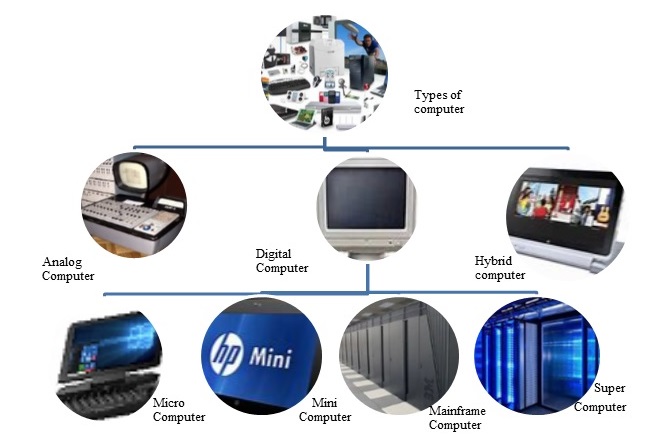


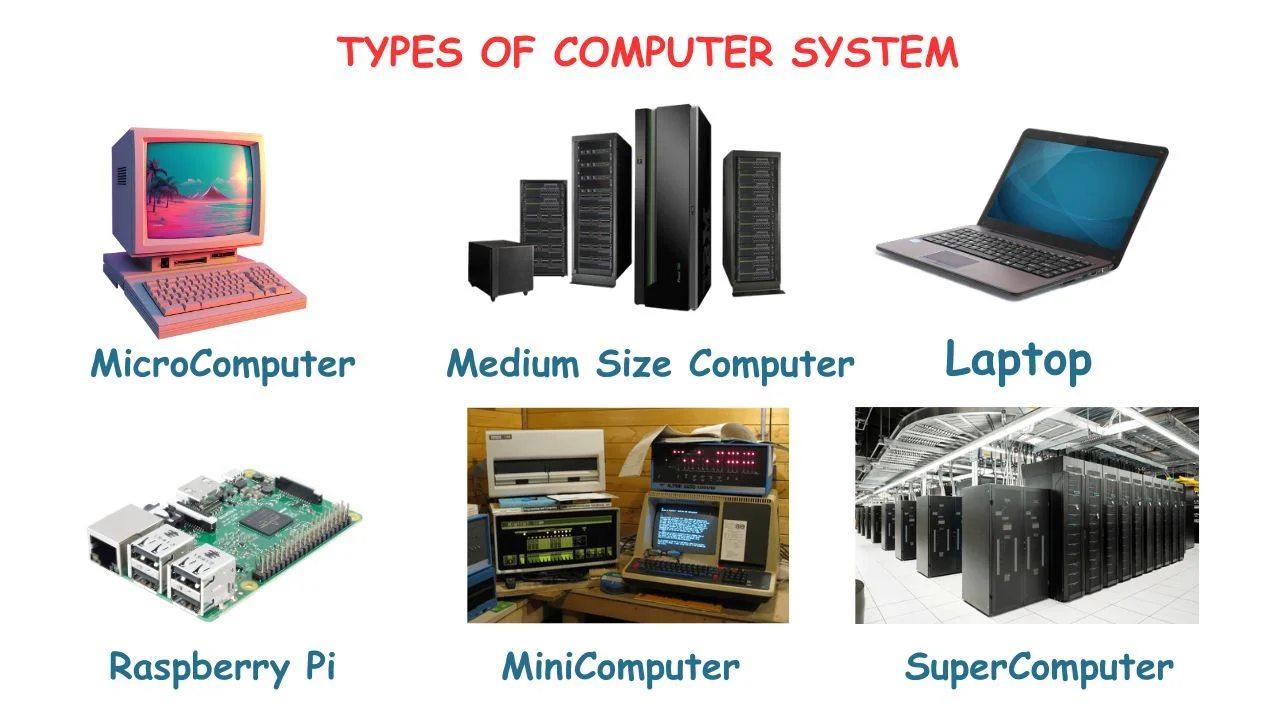
Computers can be categorized by size and function, including supercomputers, mainframes, minicomputers, and microcomputers (such as desktops, laptops, and smartphones). Other types include specialized computers like servers, workstations, embedded systems, and emerging categories like quantum computers. Another classification based on data handling is into digital, analog, and hybrid computers.
Classification by size and power:
-
- Supercomputers: The largest, fastest, and most expensive computers used for complex scientific research like weather forecasting and nuclear energy research.
-
- Mainframe computers: Large computers that support thousands of users and handle massive amounts of data, often used by large organizations like banks and governments for tasks like transaction processing and managing customer statistics.
-
- Minicomputers: Medium-sized, multi-user systems that are smaller and less powerful than mainframes, typically used in schools and departments for tasks like accounting and record management.
-
- Microcomputers: Also known as personal computers (PCs), these are small, low-cost computers designed for individual use. This category includes desktops, laptops, tablets, and smartphones.
Classification by function:
*Servers:
Powerful computers that provide services to other computers, known as clients, on a network.
*Workstations:
High-performance computers designed for demanding tasks like engineering, graphic design, and software development.
*Embedded systems:
Computers built into other devices to perform a specific function, such as the processor in a microwave, car, or medical device.
*Wearable computers:
Devices worn on the body, such as smartwatches and fitness trackers.
*Quantum computers:
A new type of computer that uses quantum mechanics to perform calculations. They are still in development but promise to solve problems that are impossible for classical computers.
By size and power:
This is the most common way to categorize computers and generally ranks them from the largest and most powerful to the smallest.
*Supercomputers: These are the fastest, most powerful, and most expensive computers. They use thousands of processors to perform complex calculations at immense speeds and are used for scientific and engineering applications like weather forecasting and nuclear research.
*Mainframes: These are large, powerful, and expensive computers that can support hundreds or thousands of users simultaneously. They are used by large organizations, like banks and airlines, for bulk data processing and managing large-scale operations.
*Minicomputers: Also known as midrange computers, these are smaller and less powerful than mainframes but still support multiple users. They are used in mid-sized organizations for tasks like accounting and inventory management.
*Workstations: A high-performance computer designed for a single user for technical or scientific applications. They are used by professionals for tasks like 3D animation, video editing, and software development and are more powerful than a standard personal computer.
*Microcomputers (Personal Computers): This category includes the most common and affordable computers, which are designed for individual users. They are used for everyday tasks at home, school, or the office.
This includes specific types such as:
*Desktop computers: Designed for use in a stationary location, typically consisting of a case, monitor, keyboard, and mouse.
*Laptops: Portable, battery-powered computers with an integrated screen and keyboard.
*Tablets: Ultra-portable, handheld devices that use a touch-sensitive screen for navigation.
*Smartphones: A mobile phone with advanced computing and connectivity features.
By data handling capabilities:
This classification is based on how the computer processes data.
*Analog computers: These devices process continuously changing analog data, such as temperature, pressure, or voltage. They were primarily used in the past for specialized scientific and industrial applications.
*Digital computers: These are the most common type of computer today and process discrete digital data in the form of binary code (0s and 1s). Modern computers like desktops, laptops, and smartphones are all digital.
*Hybrid computers: These computers combine the best features of both analog and digital computers, offering the speed of an analog computer with the memory and accuracy of a digital one. They are used in specialized applications, such as for monitoring patients in hospitals.
Other types of computers:
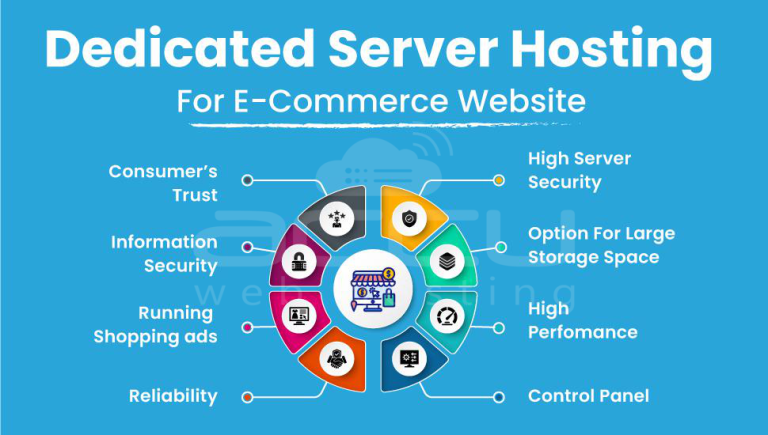
*Servers: A server is a computer that provides services, data, and programs to other computers (clients) over a network. They are essential for running websites, databases, and network services.
*Embedded computers: These are computers that are part of a larger machine or device, such as those found in cars, washing machines, and DVD players. They execute a program stored in non-volatile memory to operate a specific function.
Quantum computers: A new type of computer that uses the principles of quantum mechanics to store and process data. They have the potential to perform calculations that are impossible for classical computers and are being explored for advanced research in fields like drug discovery.
Reference link for data and pictures: https://www.google.com/search?q=Types+of+Computers&rlz=1C1CHBD_en-GBIN1169IN1169&oq=typ&gs_lcrp=EgZjaHJvbWUqBggAEEUYOzIGCAAQRRg7MgYIARBFGDkyDQgCEAAYgwEYsQMYgAQyCggDEAAYsQMYgAQyCggEEAAYsQMYgAQyBggFEEUYPDIGCAYQRRg8MgYIBxBFGDzSAQgzMDUwajBqN6gCALACAA&sourceid=chrome&ie=UTF-8