
In 2026, future trends are dominated by the maturation of AI into agentic systems, the physical convergence of AI with robotics, and the rise of sustainable, “green” technologies. Key focus areas include AI-driven cybersecurity, useful quantum computing applications, and 6G connectivity for real-time intelligence.
Top 2026 Future Trends:
- Agentic AI and Automation: Systems are evolving from passive chatbots to active agents that complete end-to-end tasks with minimal human oversight.
- Physical AI & Robotics: AI is moving into the physical world through advanced humanoid robots and autonomous machines.
- Quantum & Next-Gen Computing: Quantum computing is moving from theory to practical application in fields like drug discovery and material science. Neuromorphic computing is also gaining traction.
- AI-Driven Cybersecurity: As AI threats grow, security is shifting toward “digital immune systems” and proactive defence mechanisms.
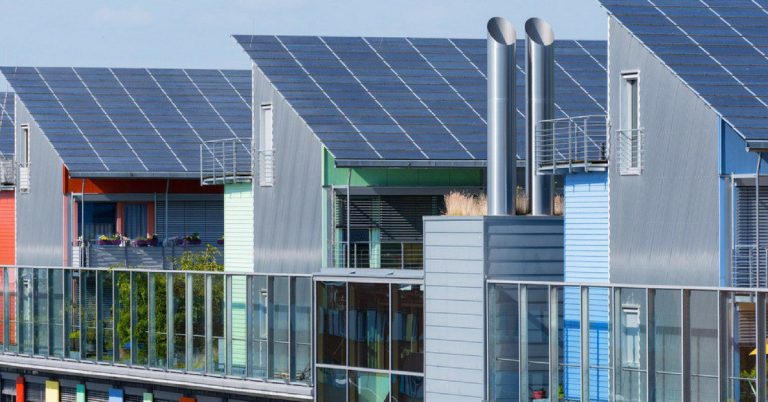
- Sustainable Tech & Green IT: High-energy AI demands are driving innovations in sustainable energy infrastructure and energy-efficient AI models.
- Ambient & Spatial Computing: Technology is becoming more invisible and integrated into environments, blending physical and virtual realities.
- Biotechnology: Advancements in synthetic biology and genetic engineering are transforming healthcare and manufacturing.
These trends reflect a shift from “AI experimentation” to “AI-native operations,” focusing on ROI, security, and ethics.
In 2026, the global landscape is defined by the transition of artificial intelligence from experimental pilots to integrated, autonomous systems. Major shifts are occurring across technology, the workforce, and consumer lifestyle as society moves toward a “human-machine collaboration” model.
1. The Rise of Agentic AI
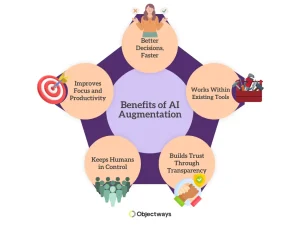
The most significant trend of 2026 is Agentic AI. Unlike standard chatbots that provide information, these “agents” are designed to take action independently—managing complex schedules, coordinating B2B transactions, and executing entire business processes with minimal human oversight.
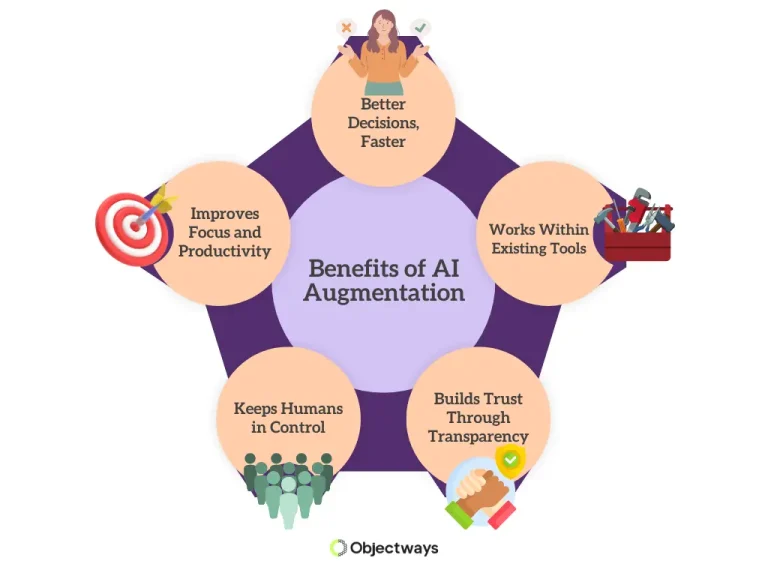
- Workforce Impact: By 2026, many organizations are shifting from “AI experimentation” to creating a silicon-based workforce where AI agents act as “co-workers” rather than just tools.
- Orchestration: Managing multiple agents (multi-agent systems) has become a critical business capability to prevent operational chaos.
2. Physical AI and Robotics
Intelligence is moving from screens into the physical world. In 2026, autonomous systems are being widely deployed in manufacturing and logistics:
- Embodied AI: Companies like Amazon have deployed millions of robots coordinated by AI to optimize warehouse efficiency.
- Co-bots: The use of “collaborative robots” that work alongside humans in factory and medical settings is now a standard practice.
3. The Technology “Energy Crisis”
As AI and quantum computing demand massive amounts of power, 2026 is seeing an aggressive shift toward sustainable infrastructure:
- New Energy Solutions: There is a surge in the adoption of small modular reactors (SMRs), hydrogen fuel cells, and advanced biofuels to power data centers.
- Inference Economics: Organizations are optimizing their compute strategies to reduce the staggering costs and environmental impact of scaling AI.
4. Human-Centric Skills & Values
As automation handles repetitive tasks, the value of uniquely human qualities is rising:
- The “Human Factor”: Skills such as empathy, ethical judgment, and critical thinking are becoming the most sought-after professional assets.
- Synthetic Content Pushback: There is a growing consumer and regulatory movement against “deepfake” or purely synthetic content, with a renewed premium on authentic human voices.
5. Consumer & Lifestyle Trends
Beyond technology, lifestyle and fashion are evolving with a focus on fluidity and nature:
- Fashion 2026: Trends include “Boho Chic” in suede, aquatic-inspired textures (mermaid-inspired sequins), and a blurring of the lines between sportswear and high fashion.
- Smart Cities: Urban environments are becoming more responsive, with real-time traffic recalibration and waste management systems powered by integrated sensor networks.
What are the top 5 future trends?
The 5 Technology Trends For 2026 Everyone Must Prepare For Now
- AI Disruption: From Reaction To Reinvention. …
- The Agentic Revolution. …
- Useful Quantum Computing. …
- Solving Tech’s Energy Crisis. …
- The Human Factor.
What will be the future trend?
Future trends such as climate change, new mobility, and digitalization are major challenges: They will shape our future life and make it unequivocally clear to us that a fresh way of thinking will be inescapable in many fields.
What are the 10 latest technology trends?
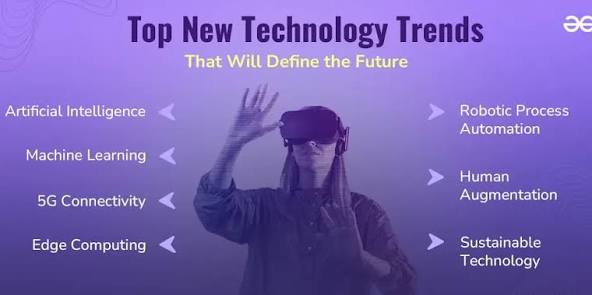
The latest tech trends for 2026 heavily focus on AI-driven automation, with trends like Agentic AI, AI in robotics (Physical AI), and AI-native development platforms dominating, alongside critical infrastructure needs like AI Supercomputing, Post-Quantum Cryptography, and Edge AI, while also emphasizing Sustainable Technology, Digital Provenance, and AI Security to manage risks and build trust in an increasingly complex, AI-infused world.
Here are 10 key technology trends shaping 2026:
- Agentic AI & AI Supercomputing: AI systems are becoming more autonomous (Agentic AI), requiring massive computing power (AI Supercomputing) for complex reasoning and action.
- AI in Physical Robotics: AI is merging with robotics, leading to more capable physical robots in manufacturing, logistics, and beyond (Physical AI).
- AI-Native Platforms: Organizations are rebuilding their tech stacks to be inherently AI-driven, moving from just using AI to building with AI at the core.
- Confidential Computing & AI Security: Protecting sensitive data even while it’s being processed, and securing AI systems themselves, are major focuses.
- Post-Quantum Cryptography (PQC): Preparing for future quantum computers that could break current encryption by developing quantum-resistant security.
- Digital Provenance: Establishing trust in digital content (images, text, video) to combat deepfakes and disinformation.
- Edge AI & Distributed Compute: Processing AI closer to where data is generated (at the “edge”) for speed and efficiency, reducing reliance on centralized cloud.
- Sustainable Technology: Focusing on energy-efficient computing and reducing the environmental footprint of technology.
- Vibe Coding & Self-Evolving Software: AI assisting developers to code more intuitively, leading to software that can evolve and adapt on its own.
- Hyperautomation & Autonomous Agents: Using AI, RPA, and ML to automate complex, end-to-end business processes and tasks autonomously.
What are the 7 advanced technologies?
Seven advanced technologies shaping the future include Artificial Intelligence (AI), Quantum Computing, Biotechnology (like gene editing), Nanotechnology, Robotics & Automation, Internet of Things (IoT), and Augmented/Virtual Reality (AR/VR), all driving innovation in areas from healthcare and energy to daily life and industry. These fields are transforming how we live, work, and interact by enabling smarter systems, automation, and new realities.
Here’s a breakdown of these key technologies:
- Artificial Intelligence (AI) & Machine Learning: Creating intelligent systems that learn, reason, and solve problems, from generative AI to complex data analysis.
- Quantum Computing: Harnessing quantum mechanics to perform complex calculations far beyond classical computers, impacting drug discovery, finance, and materials science.
- Biotechnology: Advances like CRISPR gene editing and engineered proteins are revolutionizing medicine, agriculture, and understanding life itself.
- Nanotechnology: Manipulating matter at the atomic level to create new materials and devices with unique properties for electronics, medicine, and energy.
- Robotics & Automation: Developing sophisticated robots and automated systems for manufacturing, logistics, healthcare, and autonomous vehicles (like drones and self-driving cars).
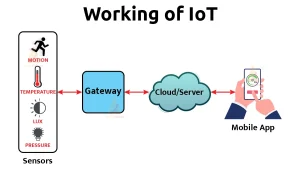
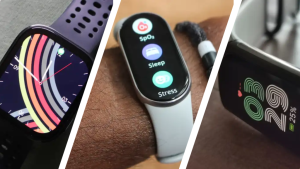
- Internet of Things (IoT): Connecting everyday objects to the internet, creating smart environments through devices like wearables, smart homes, and connected infrastructure.
- Augmented Reality (AR) & Virtual Reality (VR): Immersive technologies that blend digital information with the real world (AR) or create entirely new digital worlds (VR) for training, entertainment, and communication.
Other crucial technologies often grouped with these include 5G connectivity, advanced materials, brain-computer interfaces, and renewable energy tech.
What is the fastest growing trend?
The Power Players: Fastest Growing Industries 2026
- Artificial Intelligence & Automation. AI is no longer just a tech buzzword. …
- Clean & Renewable Energy. …
- Fintech & Digital Banking. …
- Healthcare & Biotechnology. …
- E-Commerce & Logistics Giants. …
- Space & Advanced Manufacturing. …
- The Digital Experience Economy.
What is the next future technology?
TL;DR: By 2026, technology will be driven by AI, sustainability, and intelligent automation. Agentic AI will evolve from assistance to autonomy, while green computing, edge AI, and quantum systems transform industries.
What are the top 3 global trends?
The Megatrends and their implications
- Climate change.
- Technological disruption.
- Demographic shifts.
- Fracturing world.
- Social instability.
Which is the most futuristic technology?
Contents Show>>
- 2.1 1. Artificial Intelligence.
- 2.2 2. Quantum Computing.
- 2.3 3. 6G and the Future of Connectivity.
- 2.4 4. Brain-Computer Interfaces.
- 2.5 5. Next-Gen Renewable Energy.
- 2.6 6. Autonomous Vehicles and Hyperloop.
- 2.7 7. Bioprinting and Regenerative Medicine.
- 2.8 8. Smart Materials and Self-Healing Tech.
Which technology has a bright future?
1. Artificial Intelligence & Machine Learning. AI and Machine Learning (ML) are not just trends; they are essential tools for business leaders. These technologies help companies make better decisions, work more efficiently, and tackle challenging problems.
What industry will boom in 2025?
Top five fastest growing U.S. occupations projections
- Wind turbine service technicians.
- Solar photovoltaic installers.
- Nurse practitioners.
- Data scientists.
- Information security analysts.
To know more just click reference link: https://www.google.com/search?q=Latest+in+Future+Trends&rlz=1C1CHBD_en-GBIN1169IN1169&oq=Latest+in+Future+Trends&gs_lcrp=EgZjaHJvbWUyBggAEEUYOTIICAEQABgWGB4yCAgCEAAYFhgeMggIAxAAGBYYHjIICAQQABgWGB4yCAgFEAAYFhgeMggIBhAAGBYYHjINCAcQABiGAxiABBiKBTINCAgQABiGAxiABBiKBTINCAkQABiGAxiABBiKBdIBCTE1ODU2ajBqN6gCCLACAfEFLmLZm1YKIf8&sourceid=chrome&ie=UTF-8