

The latest, most significant future trend is the rapid acceleration of AI-driven automation and the rise of autonomous, self-learning systems in commercial workspaces. This merges with advanced robotics, 5G connectivity, and sustainability-focused, decentralized digital identities to redefine production, transport, and data security.
Key Future Trends Shaping 2026 and Beyond:
- AI Agents & Self-Learning (AGI): Shifting from chatbots to intelligent agents that can generate, curate, and refine their own training data without human intervention.
AI agents are autonomous systems that leverage Large Language Models (LLMs) to reason, plan, and use tools to achieve goals, bridging the gap toward Artificial General Intelligence (AGI). Unlike narrow AI, self-learning agents adapt by improving performance through feedback, while AGI represents the theoretical, human-level intelligence that can generalize knowledge across completely new domains.
AI Agents: Key Characteristics:
- Autonomy: Agents act independently to solve complex tasks, reducing the need for human intervention.
- Reasoning & Action: They break down goals into subtasks, use tools (e.g., browsing, APIs), and iterate based on results.
- Memory & Context: Self-learning agents retain past interaction data to improve future decision-making.
- Feedback Loops:
Self-Learning in AI:
- Reinforcement Learning (RL): Agents receive rewards or penalties, allowing them to optimize behavior in dynamic environments like robotics.
- Self-Critique: Advanced agents are beginning to review their own performance, asking if a task could have been done better.
- Real-Time Adaptation: Agents update their models based on evolving data, such as changing market conditions.
The Path Toward AGI:
AGI is considered the ultimate goal of AI research, aiming to create systems with human-like cognitive abilities across all domains.
- Generalization: AGI would transfer knowledge between unrelated tasks, unlike current agents that are constrained to specific domains.
- Continuous Learning: AGI would autonomously self-improve and teach itself, rather than needing manual retraining.
- Current Research: Efforts focus on cognitive architectures,, advanced neural networks, and developing systems that understand context, rather than just recognizing patterns.
Differences: Agentic AI vs. AGI:
- Agents: High autonomy in specific domains, but limited generalization.
- AGI: General-purpose, human-like adaptability, and autonomous, cross-domain learning.
Applications of Agentic AI:
Agents are already demonstrating capabilities such as passing driver’s license tests, managing complex software workflows, and automating IT tasks.
- Autonomous Transportation: By 2027, fully autonomous vehicles are expected to operate in over 20 cities, complemented by hyperloop technology.
Autonomous transportation refers to vehicles—including cars, pods, and shuttles—that operate without human intervention, using sensors, AI, and cameras to navigate and make decisions. These systems aim to reduce accidents, improve efficiency, and enable, and provide more sustainable mobility solutions. Key technologies include lidar, radar, and GPS, often utilized in shared or public transit roles. Taylor & Francis Online +6
Key Aspects of Autonomous Transportation:
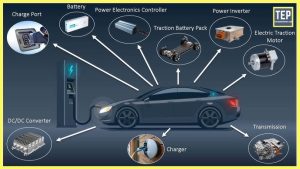
- Technologies: Vehicles use a combination of LIDAR (lasers), radar, cameras, and GPS for 360-degree awareness. Artificial Intelligence (AI) and machine learning process this data in real-time for navigation and decision-making.
- Levels of Automation: Defined by SAE (Society of Automotive Engineers) from Level 0 (no automation) to Level 5 (full automation in all conditions).
- Safety and Efficiency: By eliminating human error—a factor in most accidents—autonomous vehicles (AVs) could significantly increase traffic safety. Optimized driving patterns may also reduce congestion and fuel consumption.
- Use Cases: Beyond personal cars, applications include autonomous taxis (robo-taxis), public shuttles, and cargo transport.
- Challenges: Widespread adoption faces hurdles including regulatory, legal, and insurance frameworks, as well as public trust.
- Environmental Impact: While shared electric AVs can reduce emissions and improve city logistics, there is a risk that easier car travel could increase total vehicle miles traveled.
- Privacy-Preserving Cryptography: Using zero-knowledge proofs and decentralized identities to verify information without revealing sensitive underlying data.
- Humanoid Robots: Increased integration of human-like robots in specialized industrial and commercial workplaces.
- Sustainable Industrial IoT: Integration of green technology (Industry 4.0) to achieve carbon neutrality.
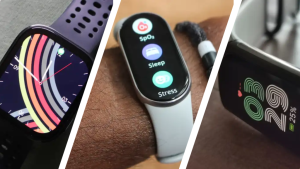
- Personalized/Preventive Tech & Health: Advancements in wearables, AI-driven diagnostics, and personalized professional skincare.
- “Human” Business Focus: Increasing emphasis on human connection, mindfulness, and employee wellness in response to AI-dominated workspaces.
What is autonomous transportation?
Autonomous Vehicles:
Advanced driver assisted systems, such as adaptive cruise control, automatic parking, and collision avoidance, are the first widespread automated systems. Fully autonomous, or self-driving, vehicles can perform all driving functions without human intervention.
Industrial Focus:
The overarching trend is the collision of technology with infrastructure, where AI requires massive power and aging populations require advanced automation.
Consumer Focus:
Expect the rise of “quiet luxury” fashion, tech-friendly clothing, and AI-powered entertainment.
What are some future trends?
By 2040, the increasing convergence of technologies, such as artificial intelligence (AI), high-speed telecommunications, and biotechnology, will be augmented by increased understanding of the social and behavioral sciences to enable rapid breakthroughs and user customized applications that are far more than the sum of ….
Which 3 jobs will survive AI?
According to Bill Gates, the three jobs that will survive the AI takeover—due to their need for high-level judgment, human creativity, and specialized knowledge—are
AI tool designers (coders), biology-related professionals (life sciences), and energy sector experts. These fields involve complex problem-solving that AI cannot fully automate.
- Designing AI Tools (Software/AI Developers): While AI generates code, humans are needed to build, refine, and oversee AI systems, ensuring accuracy, security, and strategic direction.
- Biology and Life Sciences Experts: Beyond data analysis, human biologists are critical for creative scientific breakthroughs, such as new drug discoveries and complex medical research that AI cannot replicate.
- Energy Sector Experts: This sector requires managing complex, global infrastructures, such as renewable energy and nuclear power, requiring human oversight for safety and strategic decision-making that AI cannot solely manage.
Other roles with low risks of automation include specialized healthcare workers (surgeons), mental health counselors, and those in creative fields that depend on human intuition
What will be the biggest trend in 2026?
5 Consumer Trends That Will Define 2026: What’s Next in Social Media & More>>
- #1 – THE INDIVIDUAL EMPIRE
- #2 – THE UNPLUGGING OF GEN ALPHA
- #3 – THE MONETIZATION OF RANDOM CONTENT
- #4 – THE RISE OF THE CONTINENT OF AFRICA
- #5 – THE RISE OF ALTERNATIVE SPORTS
What are the latest Gen Z trends?
Current Gen Z trends in 2026 are defined by a blend of Y2K nostalgia, digital-first shopping, and a strong preference for sustainable, authentic, and “dupe” culture. Key trends include thrifting, gender-fluid fashion, AI adoption, mental wellness, and content creation via TikTok and YouTube.
Fashion & Aesthetics:
- Y2K 2.0 & Nostalgia: Continued love for late 90s/early 2000s fashion (low-rise jeans, baby tees), updated for comfort.
- Sustainable Thrift: Strong preference for pre-loved, upcycled, and vintage clothing.
- Gender-Fluid & Oversized: Focus on unisex styles, neutral cuts, and comfortable, oversized silhouettes.
- Minimalism with Personality: Clean, tailored staples (e.g., blazer, simple pants) mixed with unique accessories.
Shopping & Technology
- “Dupes” Over Luxury: A major focus on finding affordable alternatives (“dupes”) to high-end, popular items, say eMarketer.
- Social Commerce: TikTok and Instagram are primary product discovery tools, per Sprout Social.
- Authenticity & Ethics: Prioritizing brands that are transparent and socially/environmentally conscious.
- AI & Digital Native Tools: Smart use of AI for personal branding, work, and creative expression.
Lifestyle & Culture:
- Mental Health Focus: A strong prioritization of mental well-being, coupled with high awareness of “climate anxiety,” say McKinsey & Company.
- Entrepreneurship/Side Hustles: High engagement in side hustles, passion projects, and online content creation.
- Active Social Lives: Socially active through both digital (gaming/social media) and physical channels, per Innova Market Insights.
Social Media Usage
- TikTok/YouTube Dominance: These platforms are preferred for news, entertainment, and product discovery, according to Sprout Social and Think with Google APAC.
- Memetic Communication: Using memes, GIFs, and informal content to express themselves.
What jobs will no longer exist in 2030?
The most vulnerable roles include data entry clerks, telemarketers, customer service reps, fast food workers, and drivers — basically, any job with repetitive, routine tasks. But here’s the good news: 170 million new roles will emerge in the same period.
Why is Gen Z struggling to get jobs?
Gen Z faces a historically tough job market, characterized by hiring freezes, rising layoffs, and entry-level positions being replaced by AI or outsourced
. Employers often cite lack of professional skills, poor workplace etiquette, and lower “work-readiness” as reasons for reluctance to hire, while many entry-level job listings are reportedly fake (“ghost listings”).
Key factors contributing to this difficulty include:
- AI and Automation: Companies are using AI to replace entry-level tasks or to fill gaps, leading to a pause in hiring new employees.
- “Ghost” Listings and Tight Markets: A significant portion of listed entry-level jobs are fake (“ghost listings”), and the job market is “frozen,” meaning fewer people are quitting, reducing vacancies.
- Lack of Experience Requirements: Even entry-level roles often demand 3-5 years of experience, making it hard for recent graduates to qualify.
- Perceived Skill Gaps: Employers frequently report that Gen Z lacks vital soft skills, such as professional communication, reliability, and conflict resolution, leading to a preference for more experienced workers or freelancers.
- Cultural Mismatch/Work Ethic Misconceptions: Many employers feel Gen Z is difficult to manage and prone to utilizing social media during work hours. This is often tied to Gen Z’s focus on mental health and reluctance to sacrifice personal life for a career, which some employers view as a lack of dedication.
- Economic Uncertainty: Macroeconomic factors are causing companies to limit hiring, especially of less experienced staff.
Please note that: The insights provided are based on research, articles, and discussions from the past year.
Please note that: The insights provided are based on research, articles, and discussions from the past year.
Kindly check the reference link: https://www.google.com/search?q=What+is+the+Latest+Future+Trend+%3F&oq=What+is+the+Latest+Future+Trend+%3F&gs_lcrp=EgZjaHJvbWUyBggAEEUYOTIICAEQABgWGB4yCAgCEAAYFhgeMg0IAxAAGIYDGIAEGIoFMgoIBBAAGIAEGKIEMgcIBRAAGO8FMgcIBhAAGO8F0gEJMTI5ODNqMGo3qAIIsAIB8QVt74tM_G6Nig&sourceid=chrome&ie=UTF-8