

Sustainable agriculture is a holistic farming approach that meets current food and fiber needs without compromising the ability of future generations to meet their own. It focuses on environmental stewardship, economic profitability, and social responsibility—often called the “three pillars” of sustainability.
Key Principles and Practices:
- Environmental Stewardship: Protecting soil health, managing water efficiently, reducing synthetic pesticides and fertilizers, and enhancing biodiversity.
Environmental stewardship is the responsible management, protection, and conservation of natural resources by individuals, organizations, and communities to ensure long-term environmental health and sustainability. It involves proactive, ethical actions—like conservation and pollution reduction—to protect ecosystems for future generations.
Key Aspects & Usage Examples:
- Conservation Activities: Planting trees, removing invasive species, restoring local habitats, and creating community gardens or green spaces.
- Sustainable Practices: Reducing energy waste, limiting water usage, and implementing sustainable industrial, business, and agricultural practices.
- Waste & Pollution Reduction: Cleaning up litter, installing rain gardens to manage storm water, and reducing harmful pollutants.
- Ethical/Individual Choice: Purchasing sustainable products, reducing, reusing, and recycling to minimize personal impact.
- Community & Advocacy: Engaging in civic action, protecting local natural areas, and advocating for environmental policy.
Synonyms and Related Concepts
- Environmental management
- Conservation and preservation
- Ecological stewardship
- Sustainable development
- Planetary stewardship
- Ecosystem management
- Environmental care/guardianship
- Environmental responsibility
Essentially, it is the ethical obligation to care for the earth, treating natural resources as something to be managed rather than just consumed.
- Economic Viability: Ensuring farming remains profitable for farmers while promoting local economies.
Economic viability in agriculture is the ability of a farm to cover its production costs, provide a competitive return on investment, and remain profitable over the long term, ensuring livelihood stability. It relies on productivity, market access, cost management, and favorable policies to withstand market volatility.
Key Factors Determining Economic Viability
- Profitability and Cost Control: Positive net value added, where income exceeds input costs (seeds, labor, fertilizer) and depreciation.
- Farm Size and Scale: Smaller farms often face higher challenges, requiring optimized, specialized, or high-value crops to remain profitable.
- Market Access & Technology: Access to technology, market information, and efficient supply chains is critical.
- Financial Resources: Access to formal credit is necessary to prevent debt traps, often aided by farmer collective organizations (FPOs).
Challenges to Economic Viability:
- Price Volatility: Lack of control over fluctuating market prices for outputs.
- Input Costs: High costs of fertilizers, pesticides, and technology.
- Climatic & Resource Factors: Water scarcity and climate-related risks (droughts, floods).
Strategies for Improving Viability:
- Diversification: Shifting to high-value crops or integrated farming systems.
- Value Addition: Processing products on-farm to increase profit margins.
- Sustainable Practices: Adopting organic farming can improve long-term viability by lowering input costs, although it often presents higher initial transition costs.
- Policy Support: Government interventions like Minimum Support Price (MSP) help protect farmers, but often require improved implementation to be effective.
For an in-depth understanding, you can explore the SWAYAM course on the Economic Viability of Indian Agriculture >>
- Social Equity: Ensuring fair treatment of workers and access to healthy, nutritious food for all.
Social equity in agriculture ensures fair access to land, resources, and decision-making for all, particularly marginalized groups, women, and smallholder farmers. It aims to correct historical injustices and structural inequalities, promoting fair wages, land rights, and safe working conditions to build sustainable, resilient food systems.
Key aspects of social equity in agriculture include:
- Gender Equity in Agriculture: Women could increase agricultural production by 20–30% if they had equal access to assets and resources, says Gender and Social Equity in Agriculture.
- Land and Resource Access: Addressing disparities in land ownership, water rights, and credit for marginalized groups is essential for Social Equity in Agriculture.
- Fair Labor Practices: Ensuring just compensation, fair wages, and safe, dignified working conditions for farm laborers.
- Inclusive Decision-Making: Including diverse voices, such as Indigenous populations and smallholders, in policy creation and supply chain governance.
- Economic Equity: Implementing fair pricing and fair trade certifications for producers to ensure equitable distribution of income along the supply chain.
- Climate Resilience: Addressing inequities in vulnerability, as marginalized populations often suffer disproportionately from climate-related shocks, as discussed in Social Equity in Climate-resilient Agriculture1.
Benefits of strengthening equity in agriculture include improved food security, higher farming efficiency, and increased productivity, according to the IWMI – International Water Management Institute. For a deeper dive into these issues, the Sustainable Agriculture Network offers further insights.
- Key Techniques:
- Crop Rotation & Diversity: Planting different crops to improve soil health and break pest cycles.
Crop rotation and diversification involve alternating plant species to break pest cycles, improve soil structure, and increase nutrients. Diversifying from simple, monoculture systems (like corn-soybean) to complex rotations enhances soil health, increases yields, and boosts profitability by an average of 37%. Diverse systems also provide resilience to environmental stress.
Key Benefits of Crop Rotation and Diversity:
- Soil Health Improvement: Rotations prevent the depletion of specific soil nutrients, improve soil structure with varied root depths, and break disease cycles.
- Economic and Yield Stability: Diverse rotations, such as incorporating wheat into corn-soybean cycles, have been shown to increase crop productivity and overall profit.
- Pest and Disease Control: Changing crops interrupts the life cycles of pests and pathogens, reducing dependence on synthetic chemicals.
- Environmental Resilience: Diverse rotations have been shown, according to research, to reduce the risk of crop loss under poor growing conditions, notes theUSDA ARS report.
- Soil Nutrient Management: Using nitrogen-fixing legumes (e.g., peas, chickpeas) reduces the need for artificial fertilizers.
Implementation Strategies:
- Plan Varied Sequences: Rotate between different families of plants (e.g., cereals
legumes
root crops).
- Incorporate Cover Crops: Utilize cover crops to maintain soil cover and boost organic matter.
- Include Perennials: Long-term rotations (5–10 years) with diverse, deep-rooted species can enhance microbial activity.
Common Rotation Types:
- Two/Three-Year Rotation: A simple alternating cycle like corn-soybean-wheat.
- Complex Rotations: Involving dozens of crops, common in organic systems, which improve, according to researchers, the productivity and profitability of crop rotation, as discussed inthis Nature study.
Key Research Findings:
- Profitability: Studies indicate that diversification can increase profits by, according to research, 37% over traditional systems, a finding highlighted inthe Nature study.
- Soil Quality: Diversified, 2-year rotations (like those described onthis ScienceDirect page) can improve the soil quality index by 4.1%–18.9%.
Soil quality is the capacity of soil to function as a vital living ecosystem that sustains plants, animals, and humans. It involves maintaining productivity, filtering water, and cycling nutrients, heavily influenced by management practices. Good soil quality is defined by robust physical, chemical, and biological indicators, including organic matter, structure, and nutrient levels.
Key Aspects of Soil Quality:
- Definition: Often described as “soil health,” it emphasizes the living component (bacteria, fungi, microorganisms) and its role in ecosystem stability.
- Functions: Healthy soil acts as a nutrient reservoir, enables water infiltration, supports biodiversity, and detoxifies contaminants.
- Key Indicators:
- Physical: Structure, texture, infiltration rates, and compaction.
- Chemical: pH, nutrient levels (Nitrogen, Phosphorus), and Cation Exchange Capacity.
- Biological: Microbial biomass, organic matter content (labile carbon), and soil respiration.
- Soil Types: Loamy soil is often considered ideal, offering a balance of sand, silt, and clay for optimal drainage and moisture retention.
Improving Soil Quality:
- Organic Matter: Adding compost and manure improves structure and nutrient levels.
- Reduced Tillage: Minimizing plowing protects soil structure and decreases erosion.
- Cover Crops: Using cover crops reduces erosion, adds organic matter, and fixes nutrients.
Degradation Factors:
- Erosion: Deforestation and intense farming increase soil loss.
- Contamination: Improper use of pesticides and fertilizers reduces biodiversity.
- Urbanization: Soil sealing (paving) prevents water infiltration and damages soil health.
- Reduced Risk: Diverse rotations reduce risk to, for example, climate-induced crop loss, as reported in this USDA ARS article.
- Sustainable Practices: Using diverse crop rotations (such asthis approach outlined in the Scribd document) helps restore and maintain soil fertility, notes theScienceDirect study.
For more information, consider exploring the benefits of crop rotation further.
- Cover Crops: Planting crops like clover or rye to prevent erosion and manage soil quality.
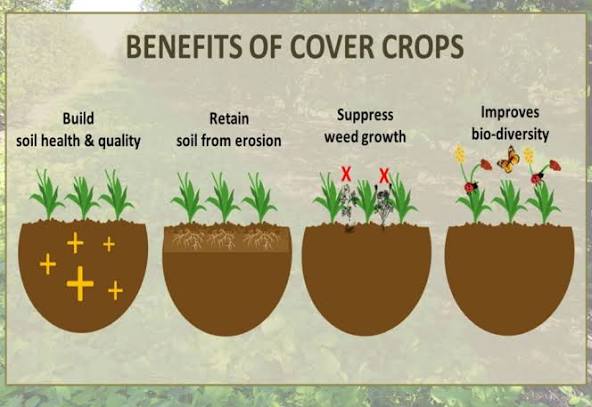
Cover crops are non-harvested plants grown primarily to manage soil erosion, enhance fertility, improve soil quality, and control weeds and pests. Typically planted during off-seasons (like winter), they fix nitrogen, increase microbial activity, and improve water infiltration. Common types include grasses, legumes, and brassicas.
Key Benefits of Cover Crops:
- Soil Health: Increase soil organic matter, enhance structure, and stimulate beneficial microbial activity.
- Erosion Control: Roots bind soil together, preventing runoff from rain and wind.
- Nutrient Management: Legumes (like clover and vetch) fix nitrogen (
) for the next cash crop, while others act as nitrogen scavengers.
- Weed & Pest Control: Cover crops act as a physical barrier, shading soil to prevent weed germination.
- Compaction Management: Deep-rooted plants like tillage radish break up compacted soil.
Common Cover Crop Types & Choices:
- Legumes: Crimson clover, hairy vetch, field peas, beans (fix nitrogen).
- Grasses/Forage Grains: Winter rye, oats, wheat, barley (excellent for soil protection and biomass).
- Brassicas: Tillage radish, daikon radish (reduce compaction).
- Warm Season: Sorghum-sudangrass, millet, cowpeas.
Planning and Implementation
- Timing: Cover crops can be planted after harvest in the fall (winter covers) or during summer months (warm-season crops).
- Termination: They can be killed via cold weather (winter-killed), mowed, grazed, or killed with herbicides before planting the main cash crop.
- Mixtures: Using a mix of species often produces better results than a single type, say.
Resources:
- Explore more in the SARE guide on Cover Crops for Sustainable Crop Rotations.
- Rodale Institute provides detailed resources on organic methods.
- See Eos.com/blog for types, benefits, and usage tips.
- Integrated Pest Management (IPM): Using natural predators and tailored strategies to manage pests, reducing pesticide reliance.
Integrated Pest Management (IPM) is an environmentally sensitive, four-tiered approach to controlling pests by combining biological, cultural, physical, and chemical tools to minimize economic damage and risks to human health. It focuses on long-term prevention through monitoring and using pesticides only as a last resort.
Four-Tiered IPM Approach:
- Set Action Thresholds: Determine at what point pest populations require action to prevent economic or aesthetic damage.
- Monitor and Identify Pests: Regularly inspect to identify pests correctly, ensuring pesticides are only used when needed and on target organisms.
- Prevention (Cultural/Physical Controls): Select resistant varieties, maintain healthy crops, manage habitat, and use sanitation to prevent infestations.
- Control (Biological/Chemical): Utilize natural predators (beneficial insects), traps, or select, target-specific, low-toxicity pesticides.
Key Principles & Benefits:
- Safety: Minimizes risks to people, property, and the environment.
- Sustainability: Reduces reliance on synthetic chemicals and lowers the risk of pest resistance.
- Applications: Used in agriculture, homes, schools, and workplaces.
- Tools: Includes crop rotation, proper irrigation, using beneficial organisms, and physical barriers.
For detailed, region-specific guidelines, the UC Statewide IPM Program provides extensive resources on pest identification and management.
- Rotational Grazing: Moving livestock between pastures to prevent overgrazing and improve pasture quality.
Rotational grazing is a land management practice where livestock are moved between subdivided pasture areas (paddocks) to graze, allowing rested areas time to recover. This method improves soil health, increases forage production, boosts animal nutrition, and breaks parasite cycles. It boosts efficiency, with some systems reducing feed costs.
Key aspects of rotational grazing include:
- Methodology: Pastures are divided into smaller paddocks using electric or permanent fencing. While one paddock is grazed, the others are allowed to rest and regrow, often for 40 to 60 days.
- Animal Management: Livestock are rotated based on forage availability and weather rather than a strict schedule. Moves can range from twice a day to every few weeks.
- Benefits:
- Soil/Plant Health: Deepens root systems and reduces erosion.
- Animal Health: Reduces parasite loads by breaking their life cycle.
- Forage Productivity: Increases yield and reduces selective overgrazing, ensuring animals eat more of what is available.
- Infrastructure: Requires investment in fencing and, often, improved water infrastructure to provide access to different paddocks.
Types of rotational grazing include intensive systems (fast rotation, high density) and simpler, slower rotations.
Benefits of Sustainable Agriculture:
- Improved Environment: It reduces chemical pollution, lowers greenhouse gas emissions (often by up to
per hectare), and uses up to
less energy compared to conventional farming.
- Long-Term Productivity: By protecting resources like water and soil, it ensures that farms remain productive in the long term.
- Healthier Food: It reduces the presence of chemical residues in food, promoting better human health.
- To know more you can just click the reference link: https://www.google.com/search?q=what+is+sustainable+agriculture&sca_esv=51f1ea3ba9abaebf&rlz=1C1CHBD_en-GBIN1169IN1169&ei=M4XWaYGnM6uT4-EPpoLQsQY&biw=1366&bih=641&ved=0ahUKEwjBjImQ2d6TAxWryTgGHSYBNGYQ4dUDCBE&uact=5&oq=what+is+sustainable+agriculture&gs_lp=Egxnd3Mtd2l6LXNlcnAiH3doYXQgaXMgc3VzdGFpbmFibGUgYWdyaWN1bHR1cmUyCxAAGIAEGJECGIoFMgUQABiABDIFEAAYgAQyBRAAGIAEMgUQABiABDIFEAAYgAQyBRAAGIAEMgUQABiABDIFEAAYgAQyBRAAGIAESJExULgHWNMccAF4AZABAJgBygGgAYgMqgEFMC44LjG4AQPIAQD4AQH4AQKYAgqgAqMNwgIKEAAYsAMY1gQYR8ICChAAGIAEGEMYigXCAgsQABiABBixAxiDAcICEBAuGIAEGLEDGEMYgwEYigXCAhEQLhiABBixAxjRAxiDARjHAcICCBAuGIAEGLEDwgIQEC4YgAQY0QMYQxjHARiKBcICEBAAGIAEGLEDGEMYgwEYigXCAhYQLhiABBixAxjRAxhDGIMBGMcBGIoFwgIIEAAYgAQYsQPCAhMQABiABBixAxhDGIMBGMkDGIoFwgILEAAYgAQYkgMYigXCAg4QABiABBixAxiDARiKBZgDAIgGAZAGCJIHBTEuNy4yoAfqQbIHBTAuNy4yuAedDcIHBTItMS45yAeAAYAIAA&sclient=gws-wiz-serp