

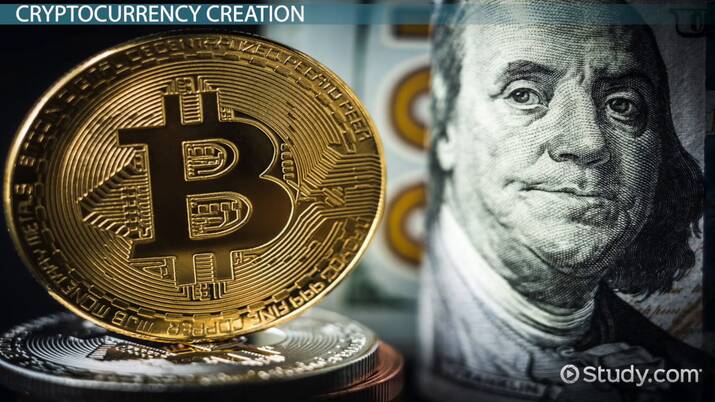
Cryptocurrency was created in 2009 by Satoshi Nakamoto as a decentralized alternative to traditional banking, driven by a desire for financial autonomy and a response to the 2008 financial crisis. The primary goals were to remove middlemen, reduce transaction costs, prevent manipulation, and create a secure, transparent peer-to-peer system.
Key Reasons for Creation:
- Decentralization: To remove the need for trusted third parties (banks/governments) in financial transactions.
Decentralized Finance (DeFi), or decentralized banking, uses blockchain technology and smart contracts to provide financial services—lending, borrowing, and trading—without traditional intermediaries like banks. Operating on public blockchains (e.g., Ethereum), it enables 24/7 global access, higher transparency, and user-controlled, non-custodial assets. This system aims for greater efficiency and financial inclusion, often at lower costs, but introduces new risks due to lack of regulation.
Key Components:
- Smart Contracts: Automated, self-executing agreements that handle financial logic without human intervention.
- Decentralized Applications (dApps): Digital applications connecting crypto wallets to blockchain-based financial services.
- Peer-to-Peer (P2P) Lending/Borrowing: Users lend directly to one another from pooled funds, often requiring digital asset collateral to mitigate risk.
- Non-Custodial Assets: Users retain control of their assets in private wallets, reducing reliance on third-party security.
Benefits Over Traditional Banking:
- Accessibility: Open to anyone with an internet connection, bypassing traditional bank gatekeepers.
- Transparency: All transactions are recorded on a public, immutable ledger.
- Lower Costs & Higher Yields: By removing middlemen (banks), users can receive higher interest rates on savings and lower fees on loans.
- Global Reach: Removes geographical restrictions for transactions.
Risks and Challenges:
- Regulation: Lack of legal oversight creates potential for fraud and scams.
- Technical Risks: Bugs in smart contract code can lead to losses.
- Collateral Risk: The volatility of cryptocurrencies can lead to sudden liquidation of collateral.
DeFi aims to redefine banking by allowing users to act as their own bank, offering a more autonomous, though higher-risk, financial landscape.
For more information, this Investopedia article offers a good overview of the concept. For a deeper understanding of the technology and its implications, I recommend checking out the IEEE conference publication and this World Economic Forum article. For a visual guide to the topic, https://www.youtube.com/watch?v=lB24kMXogl8 can also be helpful.
Would you like to know more about the risks, specific DeFi platforms, or how to set up a crypto wallet?
- Response to 2008 Financial Crisis: Created as a protest against the centralized financial system that, according to proponents, failed in 2008.
- Security & Anti-Forgery: Using blockchain technology, it provides an indestructible public record that cannot be retrospectively manipulated.
Anti-forgery tokens (or CSRF tokens) are unique, cryptographically secure values, such as those detailed in Microsoft Learn, inserted into web forms to prevent malicious third parties from executing unauthorized actions on behalf of authenticated users. ASP.NET Core uses the Synchronizer Token Pattern, where the server generates a token, verifies it upon form submission, and rejects mismatched requests.
Key Aspects of Anti-Forgery Security:
- Mechanism: Anti-forgery tokens ensure that a user’s browser actually intends to make a request, preventing malicious sites from forcing authenticated users to take actions (e.g., password changes or financial transactions).
- Implementation in ASP.NET Core: Built-in support is provided to validate tokens automatically. For instance,
[ValidateAntiForgeryToken]is used to ensure security in applications, as discussed in this Duende Software blog post. - Techniques: Common methods include using Hidden Form Fields and
SameSitecookie attributes, which restrict how cookies are sent with cross-site requests, according to Wikipedia. - Non-Browser Clients: Anti-forgery validation is generally skipped for non-browser clients, like mobile apps, that use different security protocols.
- Best Practices: To avoid errors, it is recommended to manage browser sessions properly, such as using only one tab and using the “Log out” feature.
- Lower Fees & Speed: Designed to facilitate faster, direct peer-to-peer transactions globally with fewer restrictions than traditional banks.
- Financial Inclusion & Autonomy: Gives individuals full control over their own money without fear of oversight.
Financial inclusion enhances personal autonomy, especially for women, by providing direct access to bank accounts and digital services, fostering decision-making power, increased mobility, and improved household well-being. It transforms from a passive service into an active empowerment tool, facilitating economic independence through savings and loan access.
- Impact on Women’s Autonomy: Access to personal, operable bank accounts improves women’s agency, allowing them to make strategic financial decisions rather than just managing household expenses.
- Key Drivers of Empowerment: Financial inclusion facilitates:
- Decision-making: Increased control over income and expenditures.
- Mobility: Greater freedom in personal movement.
- Economic Stability: Enhanced ability to cope with financial shocks.
- Digital Financial Inclusion (DFI): Digital services (e.g., payments) enhance safety and convenience for low-income individuals. However, barriers like limited digital literacy and security concerns can hinder uptake among older populations.
- Limitations and Challenges: While accessing financial services is a necessary first step, it is not sufficient for full autonomy; structural barriers, gender norms, and financial literacy levels must also be addressed to ensure effective use.
- Broader Economic Role: Increased financial inclusion of women supports higher economic participation and stability in the financial sector.
The Taylor & Francis Online study discusses how tailored programs can help overcome these barriers. For a more detailed analysis, the RePEc study examines the direct link between formal banking access and personal agency in developing economies.
- Privacy & Anonymity: Offers a secure method for transactions that provides anonymity to its users.
According to the Wikipedia article on Cryptocurrency, it is widely considered to have libertarian roots.
For a detailed look at the history, visit the Uphold article on the topic.
To give you the most relevant information, adding more about:
- The early history of Bitcoin and its founder:
Bitcoin was proposed in October 2008 by the pseudonymous Satoshi Nakamoto in a white paper, launched on January 3, 2009, with the “genesis block”. Designed as a decentralized, peer-to-peer electronic cash system, early, critical milestones included the first transaction to Hal Finney, the first Bitcoin pizza purchase in 2010, and the establishment of its first market value.
Key Early Milestones (2008-2011):
- October 31, 2008: Nakamoto publishes the white paper, “Bitcoin: A Peer-to-Peer Electronic Cash System“.
- January 3, 2009: The genesis block (Block 0) is mined, launching the network.
- January 12, 2009: First transaction occurs, with Nakamoto sending 10 BTC to developer Hal Finney.
- May 22, 2010: The first real-world transaction occurs: 10,000 BTC were used to purchase two pizzas, now known as “Pizza Day“.
- 2010: The first trading market, New Liberty Standard, sets a price (initially about 1,300 BTC per $1).
- 2011: Bitcoin hits parity with the US Dollar, and alternative cryptocurrencies (“altcoins”) begin to emerge.
Predecessors and Philosophy:
- Origins: Created as a response to the 2008 financial crisis to remove reliance on central banks.
- Influences: The system built upon earlier cryptographic projects such as Wei Dai’s b-money and Nick Szabo’s bit gold.
- Disappearance: In 2011, Satoshi Nakamoto departed the project and turned control over to the community.
- Blockchain security assurance:
Blockchain security assurance involves a comprehensive framework of technologies, processes, and audits—including cryptography, consensus mechanisms, and code audits—to protect decentralized networks. Key measures include smart contract auditing, multi-signature wallets, and 51% attack prevention to ensure data integrity, immutability, and confidentiality.
Core Components of Blockchain Security Assurance:
- Cryptographic Security: Utilizing hash functions (e.g., SHA-256) and public-key cryptography (e.g., P2PKH addresses) ensures that data is tamper-resistant and authentic.
- Consensus Mechanism Security: Proper implementation of proof-of-work (PoW) or proof-of-stake (PoS) prevents unauthorized, fraudulent, or altered transactions.
- Smart Contract Audits: Regular audits and testing (e.g., formal verification) check code for vulnerabilities like reentrancy or logic errors.
- Network Protection: Securing nodes against Sybil attacks, Eclipse attacks, and routing attacks through node monitoring and secure network configuration.
- Key Management: Using secure wallets, multisig, and hardware security modules (HSMs) to protect private keys.
Key Security Risks & Vulnerabilities:
- 51% Attacks: A party gains control of most of the network’s mining power (PoW) or stake (PoS) to manipulate transaction records.
- Smart Contract Vulnerabilities: Flaws in code that allow attackers to drain funds or take over functionality.
- Phishing Scams: Tricking users into revealing their private keys.
- Endpoint Vulnerabilities: Attacking the interfaces, apps, or devices that connect to the blockchain, rather than the blockchain itself.
Best Practices for Assurance:
- Conducting Regular Audits: Frequent, third-party security audits of code and infrastructure are vital.
- Implementing Monitoring Systems: Real-time monitoring for suspicious activities using AI-powered tools to identify, for example, risky payloads, as Check Point suggests.
- Adopting Secure Development Life Cycle (SDLC): Integrating security checks throughout the development process of decentralized applications (dApps)
- Specific examples of altcoins and their goals:
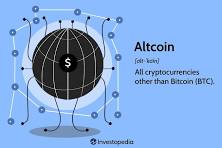

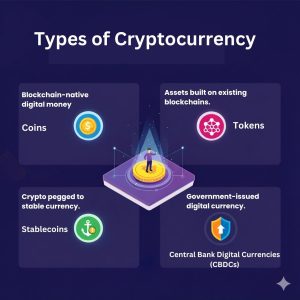
Altcoins, or “alternative coins,” are cryptocurrencies other than Bitcoin, usually offering unique features like faster transactions, smart contracts, or meme-driven utility. Examples include Ethereum (ETH), Solana (SOL), Litecoin (LTC). Prominent types include:
- Platform/Infrastructure: Ethereum (ETH), Cardano (ADA), Solana (SOL), Polkadot (DOT).
- Stablecoins: Tether (USDT), USD Coin (USDC).
- Payment/Utility: Litecoin (LTC), Ripple (XRP), Bitcoin Cash (BCH), Stellar (XLM).
- Memecoins: Dogecoin (DOGE), Shiba Inu (SHIB).
What is the purpose of creating cryptocurrency?
Cryptocurrency is digital money that doesn’t require a bank or financial institution to verify transactions. You can use it to make purchases or as an investment. The system then verifies transactions and records them on a blockchain, an unchangeable ledger that tracks and records assets and trades.
What is Eric Trump saying about crypto?
Eric Trump recently predicted that Bitcoin will eventually reach a price of $1 million, pointing to its strong long-term potential driven by institutional adoption and limited supply.
What are the big 3 crypto?
Cryptocurrency Prices Today By Market Cap
| # | Name | Price |
|---|---|---|
| 1 | Bitcoin (BTC) | $70.89K |
| 2 | Ethereum (ETH) | $2.19K |
| 3 | Tether (USDT) | $1.00 |
| 4 | XRP (XRP) | $1.33 |
What does Mark Zuckerberg say about crypto?
Facebook CEO Mark Zuckerberg says Facebook will be looking into cryptocurrency in the new year. “There are important counter-trends to this — encryption and cryptocurrency — that take power from centralized systems and put it back into people’s hands,” Zuckerberg wrote in his 2018 mission statement, issued on Thursday.5 Jan 2018
To know more about Crypto just click the Google reference link: https://www.google.com/search?q=Reason+behind+creating+Crypto+Currency&rlz=1C1CHBD_en-GBIN1169IN1169&oq=Reason+behind+creating+Crypto+Currency&gs_lcrp=EgZjaHJvbWUyBggAEEUYOTIJCAEQIRgKGKABMgcIAhAhGI8C0gEJMjA3MzRqMGo3qAIIsAIB8QVkMyrbnLVkPw&sourceid=chrome&ie=UTF-8