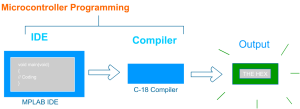


An IDE (Integrated Development Environment) is a comprehensive software suite that combines multiple tools for programmers, such as a code editor, debugger, and build automation tools. A compiler is a specific program that translates human-readable source code into machine-readable code, which the computer can then execute. Essentially, an IDE is the all-in-one workspace, while a compiler is one of the essential tools that the IDE may use to make the code run.
IDE (Integrated Development Environment):
- Definition: An IDE is a single application that provides a developer with all the necessary tools to write, test, and debug software efficiently.
- Key features:
- Source code editor: A tool for writing and editing code, often with features like syntax highlighting, auto-completion, and error checking.
- Debugger: A tool to help developers find and fix bugs in their code.
- Build automation tools: Tools that help automate the process of compiling and building the final program.
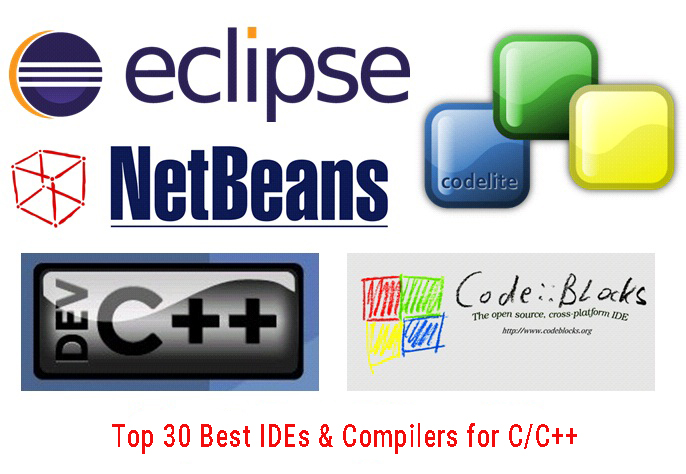
- Examples: Visual Studio, Eclipse, and PyCharm are all examples of IDEs.
Compiler:
- Definition: A compiler is a program that translates source code written in a high-level programming language (like C++ or Java) into a lower-level language that a computer can understand and execute, such as machine code.
- Key features:
- Translation: It translates the entire source code into a new file (an executable file) all at once.
- Error detection: It checks the code for syntax errors during the translation process.
- Examples: GCC (GNU Compiler Collection) is a well-known example of a compiler.
How they work together:
- An IDE integrates a compiler as one of its components to create a seamless development workflow.
- A developer writes code in the IDE’s editor, uses the debugger to find errors, and then uses the IDE’s “build” or “run” command to send the code to the compiler to be translated into an executable program.
- Without an IDE, a developer would have to use separate applications for editing, compiling, and debugging, making the process more complex and time-consuming.
What is an IDE and compiler?
An IDE compiles or converts the code into a simplified language that the operating system can understand. Some programming languages implement just-in-time compiling, in which the IDE converts human-readable code into machine code from within the application.
What is the purpose of IDEs?
An IDE is a software application that provides programmers with a single, integrated environment to write, test, and debug software more efficiently. It combines several tools that are essential for development, such as a code editor, a compiler or interpreter, and a debugger, into one user-friendly interface.
What an IDE is used for:
- Writing code: An IDE provides a code editor with features like syntax highlighting, code completion, and intelligent code suggestions, which makes writing code faster and helps prevent errors.
- Building and compiling code: IDEs typically include compilers and interpreters, allowing developers to build and execute their code with a single click, rather than using separate programs.
- Debugging code: They incorporate debugging tools that allow programmers to step through their code line by line, set breakpoints, and inspect variables to find and fix errors.
- Streamlining workflows: By bringing all necessary tools into a single application, an IDE streamlines the development process and increases programmer productivity, eliminating the need to switch between multiple disconnected tools.
- Collaborating and managing projects: Many modern IDEs also connect to version control systems like Git, enabling developers to manage their code, collaborate with teammates, and track changes directly within the environment.
Is idle a compiler?
Python IDLE is an IDE (Integrated Learning Environment) that comes with the Python programming language, enabling users to effortlessly edit, build, run, and compile Python 2. x or Python 3. x programs. One needs an IDLE or an IDE to write a program in Python and take it to the next level.
What are the three types of IDE?
- Desktop IDEs: Installed locally and often support multiple languages. Examples include Visual Studio and Eclipse.
- Cloud-Based IDEs: Run in a web browser and enable collaboration. …
- Language-Specific IDEs: Tailored to a single language or ecosystem, such as PyCharm for Python or CLion for C++.
Which is a compiler?
A compiler is a type of computer program that converts code from one programming language (the source language) into another programming language (the target language).
Is Python a language or IDE?
Python is a programming language that is widely used in web applications, software development, data science, and machine learning (ML). Developers use Python because it is efficient and easy to learn and can run on many different platforms.
What is the full form of IDEs?
IDES most commonly stands for Indian Defence Estates Service, a Group A Central Civil Service in India that manages defence lands and administers cantonment boards. However, it can also stand for Integrated Development Environment, a software application for programming.
Indian Defence Estates Service (IDES):
- What it is: A government service under the Ministry of Defence.
- Responsibilities: Managing defence lands, administering civilian affairs in cantonments, and developing cantonments into model townships.
- How to join: Through the Civil Services Examination conducted by the Union Public Service Commission (UPSC).
Integrated Development Environment (IDE):
- What it is: A software application used by programmers for software development.
- Purpose: To provide a comprehensive platform for coding, building, and debugging.
- Examples: IntelliJ IDEA, Eclipse, and Visual Studio.
What are the 4 types of programming languages?
The four types of computer languages, ordered by generation, are machine language (binary code), assembly language (using mnemonics), high-level language (human-readable syntax), and fourth-generation language (focused on specific results). This generational classification helps understand how languages have evolved to be more user-friendly over time.
- Machine Language: The lowest-level language, consisting of binary code (
000s and
111s) that a computer’s CPU can execute directly. It is complex for humans to read and write.
- Assembly Language: A step up from machine language, it uses mnemonics (short, symbolic codes) instead of binary to represent instructions. It still requires a translation process to become machine code.
- High-Level Language: These languages use syntax that is much closer to human language, making them easier for developers to use. Examples include Python, Java, and C++. They require a compiler or interpreter to translate them into machine code.
- Fourth-Generation Language: These are designed to be even more user-friendly and often focus on specifying what the result should be, rather than detailing every step to get there. An example is SQL, used for database queries.
If you are starting a career in software development and programming then this above post will help. All info collected from Google. Reference link: https://www.google.com/search?q=What+are+IDEs+%26+Compilers+%3F&rlz=1C1CHBD_en-GBIN1169IN1169&oq=What+are+IDEs+%26+Compilers+%3F&gs_lcrp=EgZjaHJvbWUyBggAEEUYOTIJCAEQIRgKGKABMgkIAhAhGAoYoAEyCQgDECEYChigATIJCAQQIRgKGKABMgcIBRAhGI8CMgcIBhAhGI8C0gEINjU5NmowajeoAgiwAgHxBZBgSJbgzzf7&sourceid=chrome&ie=UTF-8